







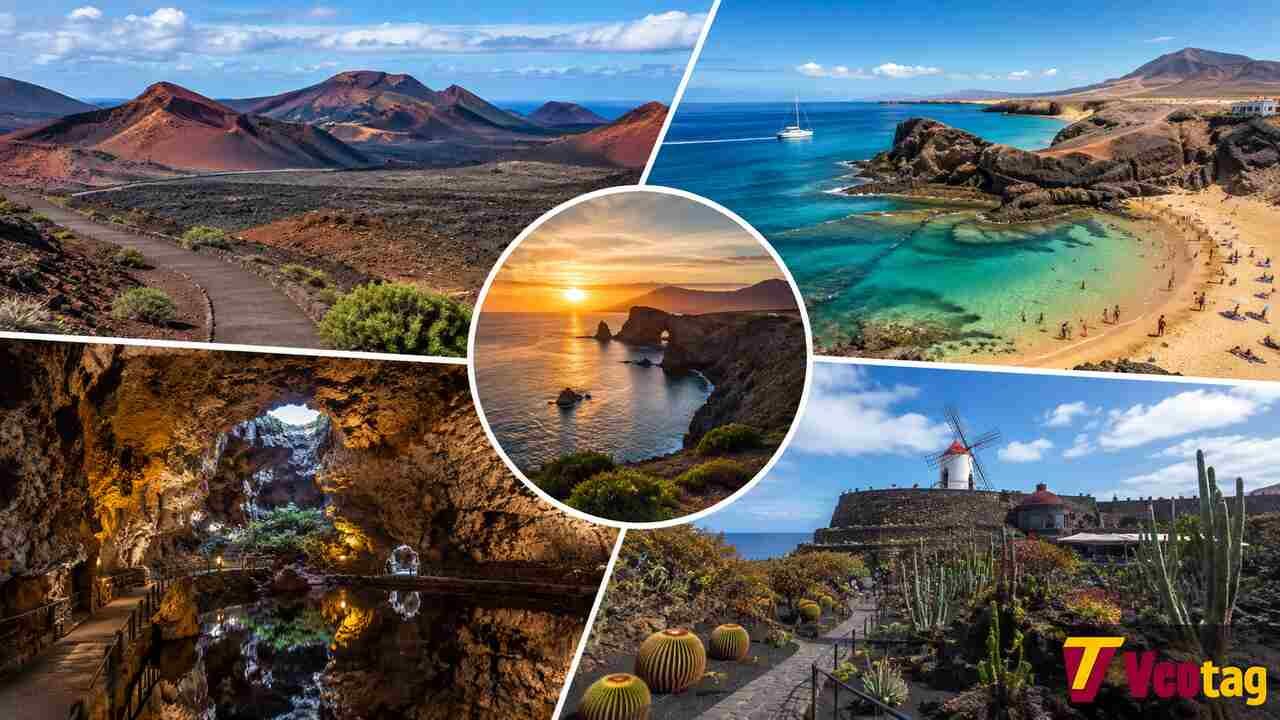
Lanzarote makes far more sense when I treat it as a journey through volcanoes, Atlantic coastline, white villages, unusual vineyards and the art of César Manrique. I start in the volcanic interior, continue north through lava caves and high viewpoints, then slow the pace at Famara and Papagayo.
This order also keeps the driving practical. Lanzarote is compact, but repeatedly crossing the island wastes valuable time.
For weather, Lanzarote stays mild throughout the year. The official tourism board gives an annual average temperature of about 21°C. January averages 17.4°C and August averages 25.2°C. Rain is limited, while wind is a normal part of the island climate.
Arriving in Lanzarote and getting around

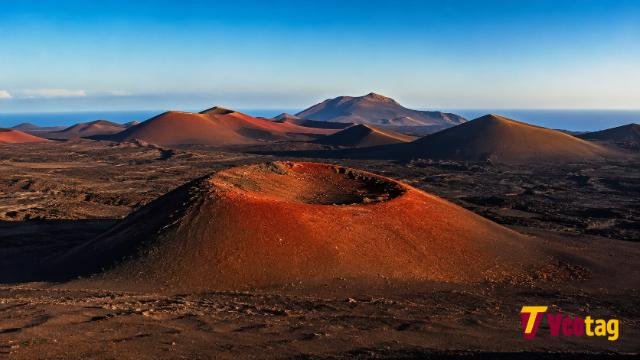
I use Lanzarote Airport as the natural starting point for the trip. The landscape begins to explain the island almost immediately. Low buildings, dry earth, volcanic hills and wide open skies replace the green scenery found on many other European islands.
For a trip focused on the best things to do in Lanzarote, I recommend renting a car. Public buses connect the main resorts and towns, and Line 161 links the airport with Puerto del Carmen, Puerto Calero, Yaiza and Playa Blanca. A car still gives far more freedom for volcanic walks, La Geria, west-coast viewpoints and Papagayo.
I group the island into three main areas:
- Southwest: Timanfaya, El Golfo, Los Hervideros, La Geria
- North: Cueva de los Verdes, Jameos del Agua, Mirador del Río, Jardín de Cactus
- Central and west: Teguise, César Manrique Foundation, Famara
That simple structure saves time.
1. Start with Timanfaya National Park
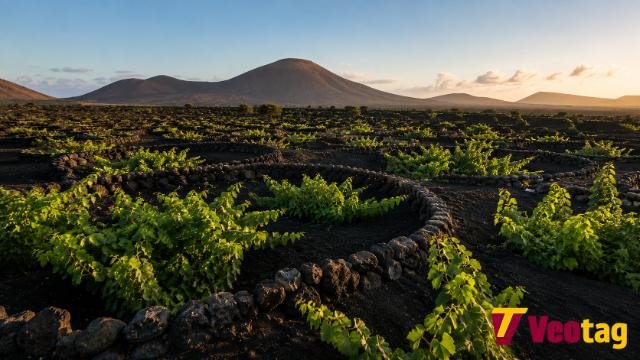
I put Timanfaya National Park at the top of the list because it explains Lanzarote better than any other single attraction.
The Montañas del Fuego section contains craters, lava flows and broad volcanic landscapes shaped by the eruptions that transformed this part of Lanzarote in the 18th century.
The visit is controlled to protect the landscape. Visitors drive to Islote de Hilario, leave their vehicle in the visitor area and join the official Route of the Volcanoes bus. The bus journey lasts about 40 minutes and is included with admission. Free exploration through the protected volcanic zone by car or on foot is not permitted.
Timanfaya ticket information
As checked in August 2026:
- Opening hours: 09:30 to 15:45
- Adult admission: €30
- Typical visit: about 75 to 90 minutes
- Tickets: online only
- A specific date and entry time are required
- Arrive 15 minutes before the booked time
There are no ticket sales at the entrance.
I recommend booking Timanfaya before organizing the rest of the island route. It is the attraction most likely to affect the day’s timing.
2. Walk around Volcán del Cuervo
After seeing Lanzarote’s volcanic landscape from the Timanfaya route, I add a walk at Volcán del Cuervo.
The marked trail circles the volcano and also leads into the crater. Lanzarote Tourism describes it as a low-difficulty route, making it one of the easier ways to experience the island’s volcanic terrain on foot.
A longer version of the trail is close to 5 kilometres. Stay on the marked path, carry water and protect yourself from the sun. Official tourism guidance also stresses the importance of staying on designated trails and leaving stones, plants and other natural material in place.
I prefer this stop early in the day or later in the afternoon. The terrain is exposed and shade is limited.
3. Drive through La Geria wine country
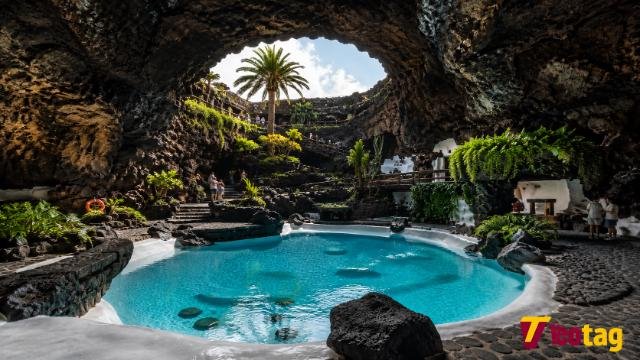
From the volcanoes, I continue into La Geria, one of the most unusual wine landscapes in Europe.
The vines do not sit in neat green rows. Farmers grow them in hollows dug into volcanic material. Curved stone walls protect individual plants from the wind, while the volcanic layer helps retain moisture.
The protected La Geria landscape covers about 5,255 hectares across several municipalities. The main wine route runs through the central part of Lanzarote, with wineries scattered between the volcanic slopes and villages.
Malvasía is strongly associated with Lanzarote wine, so I make that the grape to look for during a tasting.
The scenery matters as much as the wine. Stop long enough to look closely at the individual vines and stone shelters before moving on.
For anyone tasting wine, use a designated driver, taxi or organized wine tour.
4. See Charco de los Clicos and Los Hervideros
I keep moving southwest toward El Golfo, Charco de los Clicos and Los Hervideros.
Charco de los Clicos is famous for its green lagoon beside a dark volcanic beach. Nearby, Los Hervideros shows another side of the same coast. Atlantic waves push into cracks and cavities formed in the lava, producing bursts of white water against the black rock.
Lanzarote Tourism describes Los Hervideros as a landscape where the Atlantic breaks forcefully against volcanic formations, while the wider Yaiza coast combines the green lagoon, black lava, salt flats and golden beaches within a relatively small area.
I give this part of Lanzarote more than a quick photo stop. The west coast feels strongest when there is enough time to watch the ocean and walk between viewpoints.
5. Explore Cueva de los Verdes
My northern Lanzarote route starts underground at Cueva de los Verdes.
The cave forms part of the volcanic tube created by the La Corona volcano. The guided route covers about one kilometre through underground galleries with stairs, narrow passages and different levels.
Current practical information:
- Opening hours: 09:30 to 16:45
- Visit length: about 50 minutes
- Adult ticket: €17
- Guided visit: Spanish and English
- Tickets: online only with a fixed date and time
Visitors are asked to reach the ticket desk 15 minutes before the selected entry time.
I wear stable shoes for this type of stop. The underground route is not a place for loose sandals.
6. Continue to Jameos del Agua
From the cave, I continue to Jameos del Agua.
This attraction is connected to the same La Corona volcanic system, yet the experience feels completely different. César Manrique worked with the natural volcanic setting instead of hiding it.
Black rock, water, planted areas, curved white surfaces and carefully controlled light become part of one space. The interior lake is also home to a tiny endemic blind crab adapted to life in darkness.
Current general admission starts at €17. The site opens from 10:00 to 18:00, with last access at 17:15. A standard visit takes about 60 to 120 minutes.
Unlike Timanfaya and Cueva de los Verdes, the normal Jameos del Agua visit does not require a fixed entry time. Buying online in advance still makes entry easier.
I give Jameos enough time. Rushing through it only for photographs misses the relationship between architecture and volcanic geology.
7. Look across to La Graciosa from Mirador del Río
Next, I head higher toward Mirador del Río.
César Manrique designed the viewpoint into the cliff at Risco de Famara. From inside, large windows frame La Graciosa, El Río and the Chinijo Archipelago.
The building is part of the attraction. From outside, volcanic stone helps it blend into the landscape. Inside, the architecture guides the eye toward the sea.
Current visitor information:
- Opening hours: 10:00 to 17:00
- Adult admission: €9
- Typical visit: about 45 minutes
- Fixed time reservation: not required
Visibility changes with cloud, haze and wind, so a clear day gives the strongest panorama. The high position also makes the viewpoint noticeably windy at times.
8. Add Jardín de Cactus
I add Jardín de Cactus when the northern route has enough time.
César Manrique transformed a former volcanic quarry in Guatiza into a terraced cactus garden. The collection contains plants from several continents, and the traditional mill above the garden adds another layer to the visit.
Current admission is €9, opening hours are 10:00 to 17:00, and a normal visit takes about one hour.
The garden works especially well after the caves because it brings the journey back into open sunlight while keeping the strong contrast between black volcanic material and carefully designed spaces.
9. Spend late afternoon at Famara
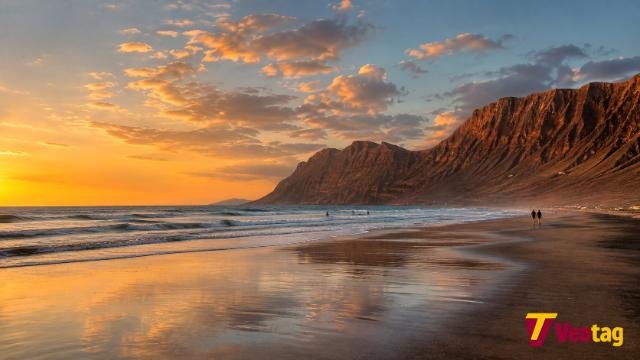
For a completely different coast, I head to Playa de Famara.
Famara is long, open and exposed to the Atlantic. The Risco de Famara cliffs rise behind the beach, creating one of Lanzarote’s most recognizable coastal landscapes.
This is also a major surfing area. Official tourism information lists strong waves, wind, surfing, windsurfing and kitesurfing among the characteristics of the beach.
I treat Famara as a walking, surfing and sunset beach rather than a guaranteed calm-swimming beach.
Check sea conditions before entering the water and respect warning flags.
Late afternoon is my preferred time for the scenery. Lower sunlight brings more shape to the cliffs, and the wet sand often reflects the sky near sunset.
10. Swim and snorkel at Papagayo
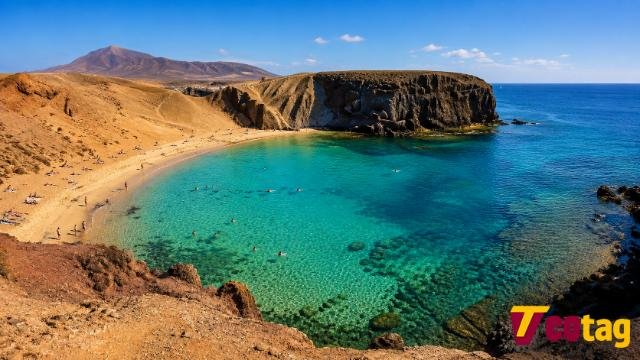
For a calmer beach experience, I switch to Playa de Papagayo near Playa Blanca.
Papagayo has fine pale sand and calmer water than Famara. Official tourism information lists swimming, snorkelling and diving among the main activities. It also confirms that there is no direct public transport to the beach.
The wider Papagayo area contains several coves inside the Los Ajaches natural landscape, so I keep enough time for a walk rather than stopping at only one viewpoint.
Bring water, sunscreen and proper footwear if exploring between coves.
For swimming, Papagayo is one of my first choices on Lanzarote. For dramatic scenery and surfing, Famara takes the lead.
11. Explore historic Teguise
I add Villa de Teguise when I want a break from lava fields and beaches.
The former island capital has a historic centre of white buildings, stone streets, courtyards and small squares. Walking works better than trying to experience it through the car window.
Sunday changes the atmosphere. Teguise Market runs every Sunday from 09:00 to 14:00 in the historic quarter, with more than 400 stalls selling crafts, agricultural products, food, clothing and souvenirs.
For the market, arrive early.
For a quieter look at the architecture and streets, visit on another day.
12. Understand César Manrique at his foundation
I make time for the César Manrique Foundation in Tahíche because the rest of Lanzarote becomes easier to understand after seeing his former home.
The building sits within a lava landscape and incorporates volcanic formations into the living spaces. Black basalt, plants, white walls and art appear together in the same design language seen at Jameos del Agua and Mirador del Río.
Current visitor information:
- Opening hours: 10:00 to 17:30
- Ticket desk closes: 17:00
- Standard admission: €10
- Joint ticket with the César Manrique House Museum in Haría: €17
The foundation closes on 1 January.
I place this stop before or after Teguise because the geography works well.
13. Eat local Canarian food
A Lanzarote trip feels incomplete if every meal comes from an international resort menu.
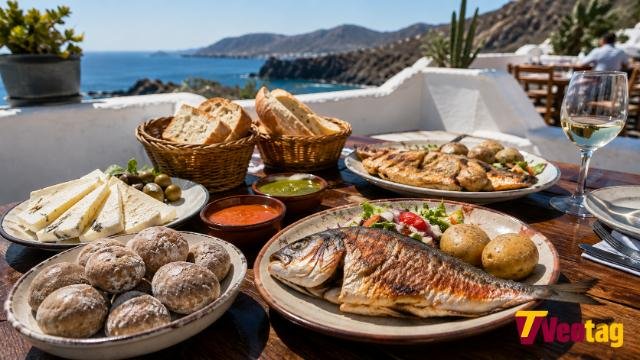
I look for papas arrugadas, small potatoes cooked in their skins and served with mojo sauces. Fresh fish, local cheeses, goat, rabbit, stews and Lanzarote wines also form part of the island’s food traditions.
A few foods I prioritize:
| Food or drink | What it is |
| Papas arrugadas | Canarian potatoes served with mojo |
| Mojo rojo | Red sauce, commonly made with peppers, garlic and spices |
| Mojo verde | Green herb-based Canarian sauce |
| Fresh fish | A natural choice in coastal villages |
| Local goat cheese | Common across Canarian food culture |
| Malvasía wine | One of the signature wines connected with La Geria |
| Sancocho | Traditional fish-based dish |
I pair food with the day’s geography. Fish fits naturally around El Golfo or another coastal village. Wine belongs with La Geria. Teguise works well for local snacks on market day.
My 4-Day Lanzarote Route
| Day | Route | Main experiences |
| Day 1 | Timanfaya → El Golfo → Los Hervideros → La Geria | Volcanoes, coast, green lagoon, vineyards |
| Day 2 | Cueva de los Verdes → Jameos del Agua → Mirador del Río → Jardín de Cactus | Lava tube, Manrique design, northern views |
| Day 3 | César Manrique Foundation → Teguise → Famara | Art, history, village streets, sunset |
| Day 4 | Playa Blanca → Papagayo | Swimming, snorkelling, beach time |
This route keeps each day geographically focused and leaves enough time to enjoy the places rather than simply collecting photographs.
Mistakes I avoid in Lanzarote
Arriving at Timanfaya without a ticket: Montañas del Fuego now requires advance online booking with a fixed entry time.
Leaving Cueva de los Verdes until the last minute: It also uses online timed tickets.
Treating every beach the same: Famara often has strong waves. Papagayo has calmer water.
Ignoring the wind: A sunny day can still feel cooler at exposed places such as Mirador del Río.
Walking away from marked volcanic paths: Lanzarote’s volcanic terrain is fragile. Stay on designated trails.
Trying to see the whole island in one day: Lanzarote looks small on a map, but constant driving ruins the rhythm of the trip.
Skipping inland Lanzarote: Timanfaya, La Geria, Teguise and Manrique’s work give the island much of its character.
FAQ’s
I put Timanfaya National Park first. The volcanic landscape explains the island’s geology and sets the scene for many other Lanzarote attractions.
I recommend four to five days for the main sights without rushing. Seven days gives more space for beaches, walking, food, villages and an extra island excursion.
A car is not essential for a resort-based holiday, but it makes sightseeing much easier. Buses connect major towns and resorts, while several natural areas are less convenient without private transport.
Choose Famara for cliffs, surfing, long beach walks and sunset scenery. Choose Papagayo for sheltered coves, swimming and snorkelling.
Montañas del Fuego at Timanfaya and Cueva de los Verdes require online tickets with a specific date and time. Standard visits at the other CACT attractions have more flexibility.
Lanzarote works throughout the year because of its mild climate. Summer brings higher temperatures, while winter remains mild compared with much of Europe. The annual average is about 21°C.
Final Thoughts
Lanzarote is not a destination I reduce to beaches.
The strongest trip combines Timanfaya’s volcanic landscape, the strange vineyards of La Geria, Cueva de los Verdes, Jameos del Agua, César Manrique’s architecture, Teguise, Famara and Papagayo.
If I have only four days, I protect time for Timanfaya first, group the northern attractions together, save one late afternoon for Famara and keep Papagayo for a slower beach day.
That combination shows the real character of Lanzarote: fire, ocean, art, wine, wind and villages, all packed into one compact Canary Island.
Read Also: Things to Do in Harrogate: A Relaxed Two-Day Guide to Yorkshire’s Spa Town


