






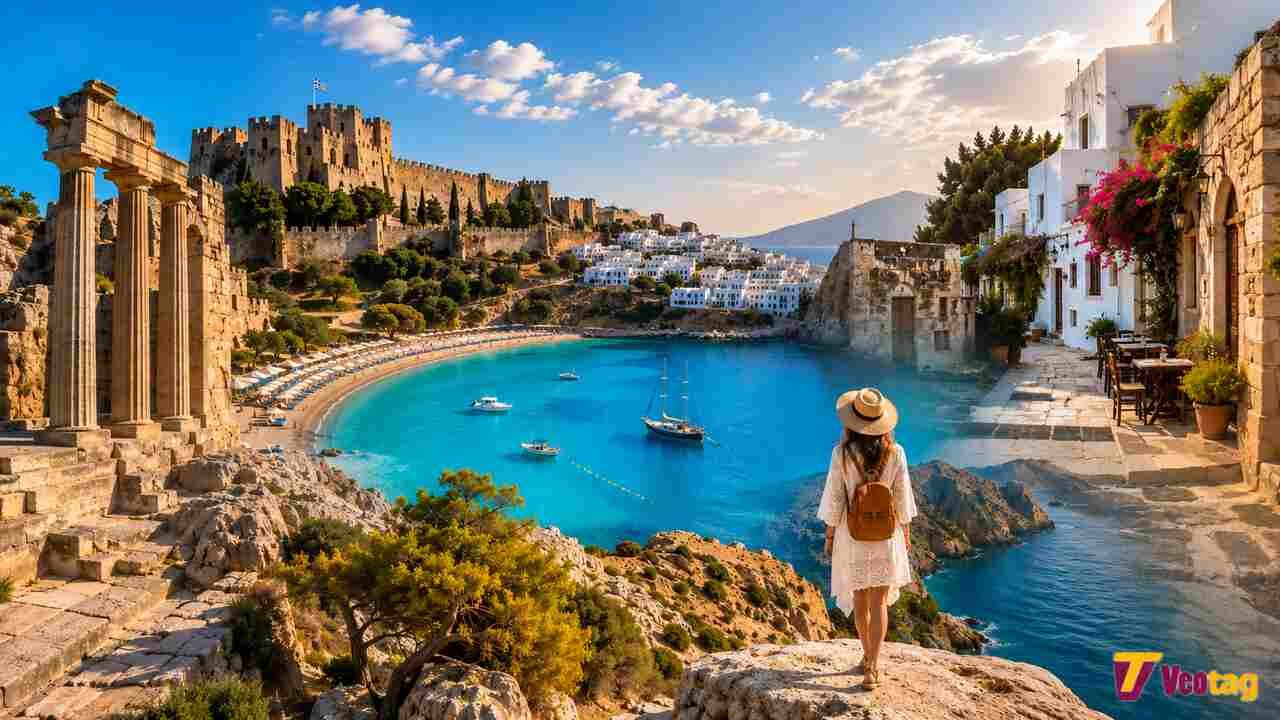
Rhodes offers far more than beaches. The island brings together medieval streets, ancient ruins, whitewashed villages, forest paths, mountain scenery and clear coastal water.
I arrived in early June, when the days felt warm and bright without the intense crowds of July and August. June gave me enough heat for swimming and enough comfort for long walks through historic areas.
May, June, September and October bring a good balance of warm weather and lighter crowds. July and August suit travelers who enjoy strong heat, busy resorts and a lively summer atmosphere.
A public bus connects Rhodes International Airport with Rhodes Town. Rhodes also has two main bus networks, RODA and KTEL. Their timetables change during the year, so check the latest schedule before each journey.
1. Walk Through the Medieval City of Rhodes

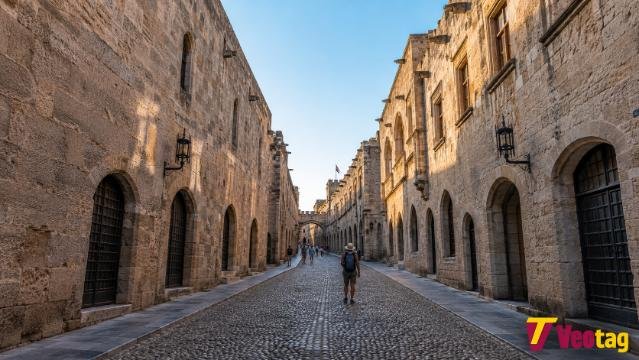
I started in Rhodes Old Town early in the morning. This timing gave me quiet lanes, cooler air and soft light on the stone walls.
The Medieval City of Rhodes sits inside about four kilometres of fortifications. The Knights of St John shaped much of the area, although Byzantine, Ottoman and Italian influences also appear across the city.
I entered through one of the historic gates and followed the cobbled streets toward the Street of the Knights. Heavy stone buildings lined both sides of the road. Arched doors, carved details and narrow side passages created a strong medieval atmosphere.
The Street of the Knights leads uphill toward the Palace of the Grand Master. Walk slowly here. Small architectural details appear above doors, around windows and on old stone walls.
Socratous Street felt busier and more commercial. Shops, cafés and restaurants filled the route. The quieter lanes near the walls gave me a calmer view of the Old Town.
Allow at least half a day for this area. A full day gives enough time for the palace, museum, streets, walls and a relaxed meal.
2. Visit the Palace of the Grand Master
I reached the Palace of the Grand Master soon after opening time. This early arrival helped me explore the entrance, courtyard and interior rooms before the main tour groups arrived.
The palace served as the residence of the Grand Master and as an important administrative centre during the period of the Knights of St John.
Its large towers create a strong first impression. Inside, the central courtyard feels open and formal. The upper rooms include decorative spaces and mosaic floors, while exhibitions explain parts of ancient and medieval Rhodian history.
Spend about one to two hours here. Arrive early during summer because the entrance and main courtyard become busy later in the morning.
Check current opening hours and ticket prices through the official Hellenic Heritage website before visiting.
3. Explore the Archaeological Museum of Rhodes
After the palace, I continued to the Archaeological Museum of Rhodes. It stands inside the former hospital of the Knights, a Gothic building completed during the late 15th century.
The museum building added as much interest as the collection. Stone stairways, shaded courtyards, arches and long rooms created a calm setting for the exhibits.
The collection includes sculpture, jewellery, coins and archaeological finds from places such as ancient Ialysos and Kamiros.
This museum gave me useful background before visiting the island’s outdoor archaeological sites. I spent about ninety minutes inside, although history lovers can stay longer.
Check official hours and admission details before arrival.
4. Walk Around Mandraki Harbour
Later in the day, I left the Old Town and followed the waterfront toward Mandraki Harbour.
The atmosphere changed quickly. Medieval lanes gave way to yachts, excursion boats, cafés, public buildings and open sea views.
At the harbour entrance, deer statues stand on tall columns. This area often appears in stories about the Colossus of Rhodes, although historians do not know its exact location or appearance.
I continued toward the windmills and Fort of St Nicholas. This full waterfront walk offered more value than any single stop.
Mandraki also works as a starting point for boat trips. Compare the route, swimming time, number of passengers, shade, food and total journey length before booking.
Late afternoon and early evening bring softer light and a pleasant walking temperature.
5. Spend a Day in Lindos

Lindos became one of the main highlights of the trip.
I arrived early and started climbing toward the Acropolis before the strongest heat. The route looked short from the village, but the slope, polished stones and crowds slowed the walk.
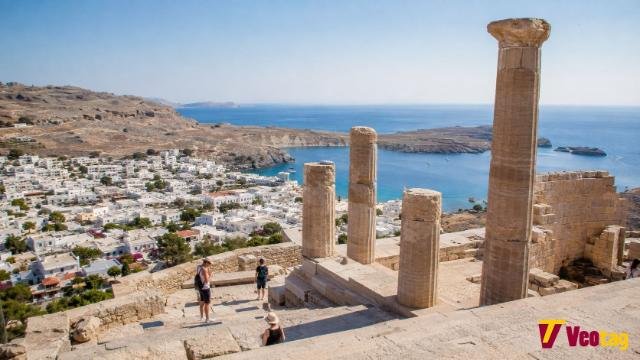
The Acropolis of Lindos contains remains from several periods. The site includes parts of the Temple of Athena Lindia, a monumental staircase, a Hellenistic stoa and later fortifications.
The view from the top gave me the strongest reason to visit. White houses filled the village below, while the coastline curved around Lindos Beach and St Paul’s Bay.
The hilltop offers little shade. Carry water, wear a hat and use shoes with a strong grip.
After the descent, I explored the village lanes. Whitewashed walls, small courtyards, rooftop restaurants and local shops filled the centre.
The main streets became crowded around midday. Side lanes offered a quieter atmosphere.
Visit the Acropolis first, explore the village next and finish with lunch or a swim.
6. Swim at St Paul’s Bay or Lindos Beach
After exploring the Acropolis and village, I went down toward the water.
St Paul’s Bay felt small, sheltered and scenic. Rocky hills surrounded much of the bay, creating a calm and enclosed setting.
Lindos Beach offered more space, easier access to cafés and a wider sandy area.
Both places become crowded during summer. Arrive early for quieter water and better beach space. Late afternoon also works well after many day visitors leave.
History first and swimming second created the most comfortable order. Climbing the Acropolis after several hours in the sun adds unnecessary effort.
7. Visit Kallithea Springs
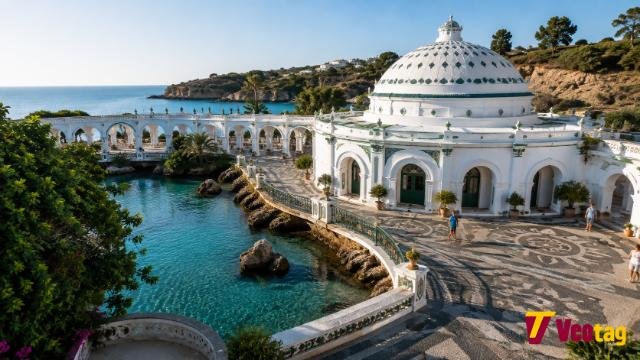
Kallithea Springs combines architecture, gardens, sea views and a small swimming area.
I explored the white rotunda, patterned floors, arched walkways and landscaped grounds before walking toward the water.
The restored buildings reflect the Italian period of Rhodes. Their curved shapes and decorative details feel very different from the medieval architecture of Rhodes Old Town.
The bathing area looks attractive but remains compact. Arrive early during busy months for easier access to the water and a good place to sit.
Choose Kallithea Springs for photography, architecture and a short swim. Choose a larger beach for a full day beside the sea.
8. Swim and Snorkel at Anthony Quinn Bay
Anthony Quinn Bay is one of the most photographed swimming places in Rhodes.
The rocky coastline, green-blue water and sheltered setting make it popular for swimming and snorkelling.
The bay feels smaller in person than it appears in many photographs. Parking and beach space fill quickly during summer.
Arrive early. Bring water shoes because parts of the shore and seabed contain rocks.
Travelers who prefer a wide sandy beach can choose Tsambika, Agathi or Lindos Beach instead.
Ladiko Bay sits nearby, so both locations fit easily into the same outing.
9. Relax on Tsambika Beach
Tsambika Beach offers a long stretch of sand and more open space than the island’s smaller coves.
I found it better suited to a relaxed beach day. Beach facilities and food options made it easy to stay for several hours.
The upper Monastery of Panagia Tsambika stands on a hill above the coast. Reaching it involves a climb and many steps.
Start the climb early, then spend the hottest part of the day by the sea. Carry water and wear proper shoes.
The view from the upper area covers a large section of the east coast.
10. Walk Through the Valley of the Butterflies

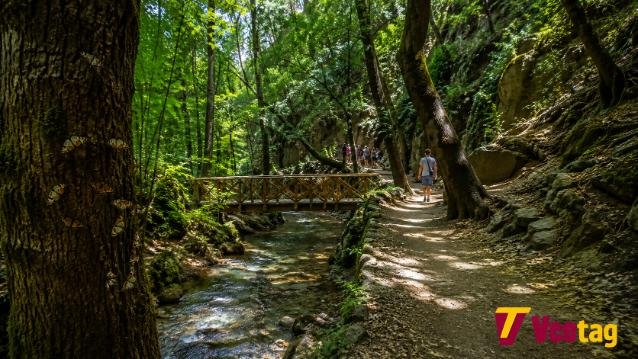
The Valley of the Butterflies gave me a cooler break from beaches and exposed ruins.
The valley contains shaded paths, streams, wooden bridges and dense trees. During the main season, large numbers of butterflies rest on trunks and rocks.
Walk quietly and avoid touching, chasing or disturbing them. The insects conserve energy while resting, so loud movement causes stress.
The route includes steep and uneven sections. Comfortable walking shoes make the visit easier.
The attraction operates seasonally. Check current opening dates and ticket information through the official website.
11. Explore Seven Springs
Seven Springs, also called Epta Piges, offers a peaceful inland setting with trees, streams and walking paths.
The cooler shade made this stop useful during a hot day.
A narrow dark tunnel forms part of the experience. The tunnel feels confined and contains shallow water, so skip it when enclosed spaces cause discomfort.
The forest area, paths and café remain accessible without entering the tunnel.
Spend one or two relaxed hours here. Combine Seven Springs with Tsambika Beach, Archangelos or another east-coast stop.
12. Discover Ancient Kamiros
Ancient Kamiros gave me one of the clearest views of daily life in ancient Rhodes.
The ruins spread across a hillside, making the former city layout easy to understand. Streets, house foundations, public spaces and water systems remain visible.
Kamiros formed one of the three ancient city-states of Rhodes, together with Lindos and Ialysos.
The site felt quieter than Lindos. It also had less shade and fewer nearby services.
Carry water and visit early during warm months.
A rental car or organised tour gives the easiest access. Combine Kamiros with Kritinia Castle, Embonas or other west-coast locations.
13. Taste Wine and Village Food in Embonas
The drive inland showed me a different side of Rhodes.
Large resorts disappeared, and mountain slopes, vineyards and small villages took their place.
Embonas is one of the island’s best-known wine areas. Local grape varieties include Athiri and Mandilaria, also called Amorgiano.
Book wine tastings directly with the winery, especially outside the main summer season.
Embonas also works well for lunch. Village tavernas often serve traditional meat dishes, local cheese, bread and seasonal food.
Choose a slow lunch instead of rushing between several villages. Inland Rhodes feels more rewarding at a relaxed pace.
14. Try Traditional Rhodian Food
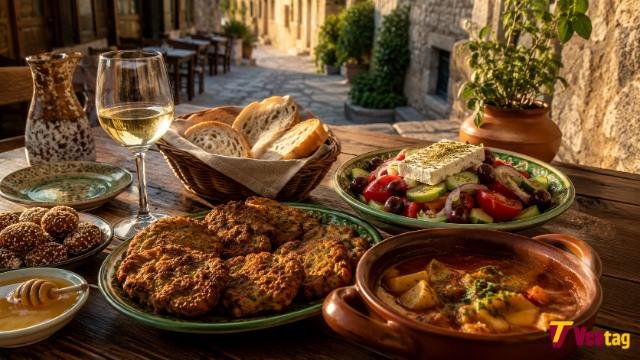
Rhodian food becomes more interesting once the meal moves beyond souvlaki and Greek salad.
Pitaroudia are chickpea fritters often made with tomato, onion and cumin.
Lakani is a slow-cooked dish that often includes goat, chickpeas, cracked wheat and spices.
Melekounia are sesame and honey bars connected with local celebrations.
Other traditional foods include giaprakia, which are stuffed vine leaves, and talagoutes, small pancakes served with ingredients such as honey, almonds and sesame.
In Rhodes Old Town, the busiest streets offer convenience, but the quieter lanes often provide a calmer meal.
In Lindos, rooftop restaurants give excellent village and sea views. Beachfront restaurants offer easy access after swimming.
Check restaurant opening days and reserve popular places during the main summer season.
15. Travel to Prasonisi
Prasonisi sits at the southern end of Rhodes and feels far removed from the busy north.
Strong winds attract windsurfers and kitesurfers. The open landscape also appeals to travelers interested in dramatic coastal scenery.
The drive from Rhodes Town takes a significant part of the day, so treat Prasonisi as a full-day trip.
A rental car provides the easiest access.
Follow local safety signs near the water. Wind, waves and currents change quickly.
Bring sun protection, water and enough fuel for the return journey.
16. Take a Boat Trip Along the East Coast
A boat trip showed me the coastline from a completely different angle.
Cliffs, bays, beaches and the medieval skyline of Rhodes Town looked more impressive from the water.
Popular routes include swimming stops along the east coast and longer trips toward Lindos.
Smaller boats often create a quieter experience. Larger boats usually include more facilities.
Before booking, check the number of stops, total swimming time, shade, toilets, food, snorkelling equipment and hotel transfer details.
Travelers who experience seasickness can choose a larger boat and check the wind forecast before departure.
A Realistic Three-Day Rhodes Route
| Day | Morning | Afternoon | Evening |
| 1 | Medieval Old Town and Palace of the Grand Master | Archaeological Museum and city walls | Mandraki Harbour and dinner |
| 2 | Early visit to Lindos Acropolis | Lindos village and beach | Rooftop or seaside meal |
| 3 | Kallithea Springs | Anthony Quinn Bay or Tsambika Beach | Return to Rhodes Town |
With four or five days, add Ancient Kamiros, Embonas, the Valley of the Butterflies or Seven Springs.
Give Prasonisi a separate day because of the long drive.
Practical Lessons and Mistakes to Avoid
My first mistake was placing too many distant locations into one day.
Rhodes is a large island. Summer traffic, parking and slower village roads increase travel time.
Group nearby attractions together. Combine Lindos with its beaches. Combine Seven Springs with Tsambika. Combine Ancient Kamiros with Embonas or Kritinia.
My second mistake was starting exposed archaeological sites too late.
Visit Lindos, Kamiros and hilltop monasteries early in the morning. The lower temperature makes climbing and walking far easier.
My third mistake was trusting an old bus timetable.
Seasonal schedules change. Check the latest RODA, KTEL and airport transport information close to the travel date.
Carry water, sunscreen and a hat. Wear shoes with a strong grip in the Old Town, Lindos and archaeological areas.
Read Also: Things to Do in Málaga: My Complete Journey Through the City
FAQ’s
Three days cover Rhodes Town, Lindos and one beach area. Five to seven days give enough time for villages, archaeological sites, nature areas and the southern coast.
Rhodes suits both interests. Explore historic sites in the morning and swim during the afternoon.
A car is not essential for a short stay in Rhodes Town with a bus trip to Lindos. A car becomes useful for Ancient Kamiros, Embonas, Kritinia, remote beaches and Prasonisi.
The strongest first-time experience combines the Medieval City of Rhodes with Lindos. These two places show the island’s medieval, ancient and coastal character.
May, June, September and October bring warm weather and lighter crowds. July and August bring stronger heat, busy beaches and a lively summer atmosphere.
Yes. Families can enjoy beaches, boat trips, Rhodes Old Town, Seven Springs and the Valley of the Butterflies. Check access conditions before visiting steep or uneven archaeological and natural sites.
Final Thoughts
Rhodes gave me far more than a simple beach trip.
The Medieval City brought history and atmosphere. Lindos combined ancient ruins, white houses and sea views. The inland villages revealed a quieter side of the island.
Prioritize Rhodes Old Town, Lindos, one scenic bay, one traditional Rhodian meal and one inland trip.
Travel slowly. A packed schedule reduces the pleasure of the island.
My top recommendation is simple: enter Rhodes Old Town early in the morning, walk without rushing and give yourself time to explore the quiet lanes beyond the main shopping streets.


