

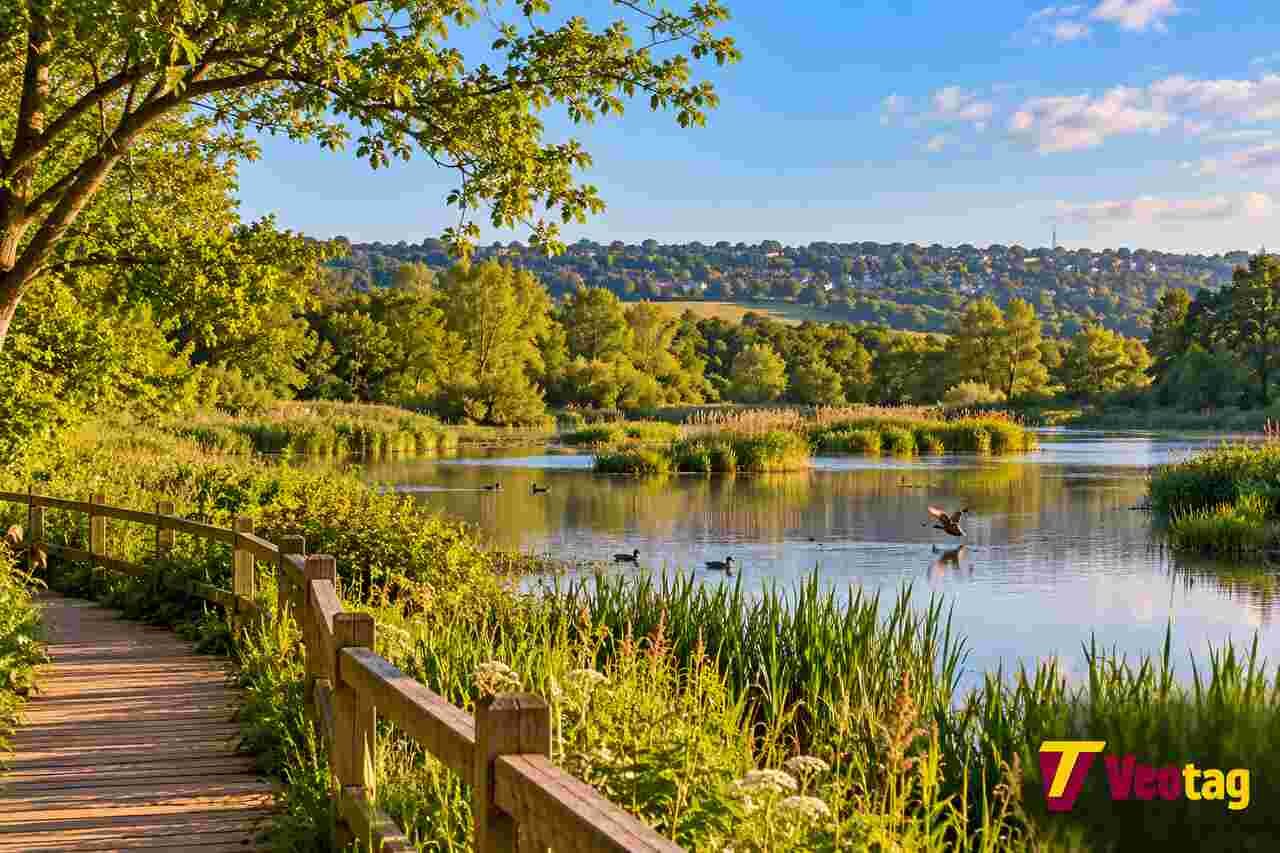
Rodley Nature Reserve is a peaceful wildlife sanctuary in Rodley, West Yorkshire, near Leeds, offering visitors the chance to explore wetlands, ponds, grasslands and woodland habitats. Located beside the River Aire and close to the Leeds and Liverpool Canal, the reserve is known for its diverse birdlife, including kingfishers, herons and waterfowl, as well as butterflies, dragonflies and other wildlife.
Where Is Rodley Nature Reserve?
Rodley Nature Reserve is situated in Rodley, a suburb of Leeds in West Yorkshire, England. It occupies land close to the River Aire and the Leeds and Liverpool Canal, creating a valuable green space within a largely urban landscape.
The reserve’s location makes it accessible to visitors from Leeds, Bradford, Pudsey, Horsforth and surrounding communities. Despite being close to residential areas and major transport routes, the site provides a relatively quiet environment where wildlife can thrive.
The surrounding waterways also contribute to its ecological importance. The River Aire and nearby canal form part of a wider network of habitats used by birds and other wildlife moving through the Aire Valley.
Rodley Nature Reserve at a Glance
| Feature | Details |
| Location | Rodley, Leeds, West Yorkshire, England |
| Main habitats | Wetlands, ponds, grassland, scrub and woodland |
| Main attraction | Birdwatching and observing local wildlife |
| Nearby waterways | River Aire and Leeds and Liverpool Canal |
| Suitable for | Nature enthusiasts, birdwatchers, photographers and families |
| Visitor facilities | Wildlife viewing hides and designated paths |
| Best seasons | Spring and autumn for changing bird activity, with wildlife interest throughout the year |
| Management | Rodley Nature Reserve Trust and volunteers |
Opening arrangements, admission conditions, accessibility and available facilities should be checked before travelling, as they can change with conservation work, weather and volunteer availability.
What Makes Rodley Nature Reserve Special?
Rodley Nature Reserve stands out because it brings together several different habitats within a relatively compact area. This variety allows visitors to observe wildlife associated with open water, wetland vegetation, woodland edges and grassland during a single visit.
The reserve has developed from land with a history of industrial and water-related use into a managed wildlife sanctuary. Its transformation illustrates how previously altered landscapes can become important spaces for biodiversity when habitats are restored and carefully maintained.
Unlike a conventional public park, the reserve is managed primarily for wildlife conservation. Visitor access, vegetation management and habitat improvements are planned around protecting the animals and plants that depend on the site.
A Valuable Wetland Habitat
Wetlands are among the most productive wildlife habitats in Britain. They provide feeding areas, shelter and breeding opportunities for birds, amphibians, aquatic invertebrates and mammals.
At Rodley, ponds, wetland vegetation and areas of open water create different conditions for wildlife. Some species prefer deeper water, while others depend on shallow edges, muddy margins or dense vegetation.
These variations matter because a wetland with several habitat types can support a wider range of species than a simple ornamental pond.
A Green Corridor Through the Aire Valley
The reserve also contributes to the wider natural landscape of the Aire Valley. Rivers, canals, hedgerows and patches of woodland provide connections between habitats that might otherwise be isolated by roads and buildings.
These connections can help wildlife move between feeding, breeding and sheltering areas.
For visitors, this means the reserve is more than an individual wildlife attraction. It forms part of a broader network of green spaces that support nature around Leeds.
Wildlife You Can See at Rodley Nature Reserve
Wildlife watching is the main reason many people visit Rodley Nature Reserve. The species present vary with the seasons, weather, water levels and availability of food.
Although sightings are never guaranteed, the reserve’s mixture of habitats creates opportunities to observe birds, mammals, amphibians, insects and native plants.
Birds at Rodley Nature Reserve
Birdwatching is one of the reserve’s best-known activities. Its wetlands and surrounding vegetation attract a range of resident and visiting species.
Birds visitors may encounter include:
- Kingfishers: These colourful birds may be spotted near water, often perched while searching for small fish.
- Grey herons: Large wading birds that hunt fish and other aquatic animals in shallow water.
- Mallards: Familiar ducks commonly associated with ponds and waterways.
- Moorhens: Dark waterbirds often seen moving through vegetation along pond edges.
- Coots: Waterbirds recognised by their black plumage and distinctive white forehead shields.
- Reed buntings: Small birds associated with reedbeds and damp vegetation.
- Robins and blackbirds: Common woodland and garden birds that use scrub and sheltered habitats.
- Warblers: Seasonal visitors that may be heard singing from vegetation during spring and summer.
The presence of individual species changes throughout the year. Some birds remain locally throughout the seasons, while others pass through during migration or arrive to breed.
Kingfishers are particularly appealing to wildlife photographers, but they can be difficult to locate. Their movements depend on suitable feeding conditions, available perches and disturbance levels.
Mammals and Other Wildlife
Although birds receive much of the attention, Rodley Nature Reserve also provides habitat for other animals.
Small mammals may use the grassland, scrub and woodland margins for feeding and shelter. Bats can take advantage of flying insects around wetland habitats during warmer evenings, although visitors should not assume that the reserve is open after dark.
The wider Aire Valley also supports mammals associated with rivers and wetlands. Seeing a particular mammal at the reserve, however, is less predictable than observing common birds.
Signs of wildlife can be as interesting as direct sightings. Tracks, feeding marks and movement through vegetation sometimes reveal animal activity that would otherwise go unnoticed.
Butterflies, Dragonflies and Damselflies
During warmer months, the reserve’s ponds and flowering vegetation provide opportunities to observe insects.
Dragonflies and damselflies are especially associated with freshwater habitats. Their young develop underwater, while adults hunt smaller flying insects.
Butterflies use sunny grassland, sheltered vegetation and nectar-producing flowers.
Visitors may notice that insect activity increases on warm, calm days. Windy, cold or rainy conditions generally make many flying insects less visible.
Amphibians and Aquatic Life
Freshwater ponds provide suitable conditions for amphibians and numerous small aquatic organisms.
Frogs, toads and newts depend on freshwater habitats for breeding, although their presence and visibility vary according to habitat conditions and the time of year.
Aquatic invertebrates also support the wider food web. Insect larvae, water beetles and other small organisms provide food for fish, amphibians and birds.
This interconnected system helps explain why maintaining healthy ponds is central to the reserve’s conservation work.
Rodley Nature Reserve Opening Times
Rodley Nature Reserve operates on selected days rather than opening every day of the week. Visitors should plan around its published schedule, particularly when travelling from outside Leeds.
The regular opening hours are:
| Period | Days Open | Reserve Opening Hours |
| March to October | Wednesday, Saturday and Sunday | 9:00 am to 5:00 pm |
| November to February | Wednesday, Saturday and Sunday | 9:00 am to 4:00 pm |
| Most bank holidays | Selected bank holidays | Seasonal opening hours |
| March to October Visitor Centre | On reserve opening days | 10:00 am to 4:00 pm |
| November to February Visitor Centre | On reserve opening days | 10:00 am to 3:30 pm |
The reserve is normally closed to the general public on Mondays, Tuesdays, Thursdays and Fridays, except for applicable bank holidays or specially arranged activities.
These are the published regular hours, but temporary changes may occur. Visitors should check the latest arrangements before leaving home.
Is Rodley Nature Reserve Free to Visit?
Rodley Nature Reserve is generally free to enter, making it an affordable destination for families, students and wildlife enthusiasts.
The reserve depends heavily on volunteers, donations and community support. Visitors who enjoy the site can help maintain its habitats by making a voluntary contribution or supporting its conservation activities.
Although general entry is free, particular events or organised activities may have separate arrangements.
How to Get to Rodley Nature Reserve
The reserve is located on Moss Bridge Road, Rodley, Leeds, LS13 1HP. Its entrance is reached from Rodley Town Street, across the Leeds and Liverpool Canal and then over the River Aire.
Visitors can travel by car, public transport, bicycle or on foot.
Getting There by Car
Drivers can approach Rodley using the A6120 Leeds Outer Ring Road and the A657 Rodley Town Street.
Brown tourist direction signs help guide visitors towards the reserve.
On-site parking is available after crossing the bridge over the River Aire, with additional spaces near the Visitor Centre. Designated Blue Badge parking is also provided.
During busy weekends, arriving earlier in the day may make parking easier.
Getting There by Bus
Rodley is served by local bus routes connecting it with Leeds and surrounding communities.
Bus services have historically included routes 9/9C, 16A and 60/60A, although routes and timetables can change.
Visitors travelling by public transport should check current West Yorkshire Metro information and allow time to walk from Rodley Town Street to the reserve entrance.
Walking and Cycling to the Reserve
Rodley Nature Reserve is accessible from the Leeds and Liverpool Canal towpath, making it an appealing destination for people who enjoy waterside walks.
Cyclists can approach using National Cycle Route 66 and the Aire Valley towpath network.
Cycling is permitted along the access road towards the Visitor Centre, where bicycle racks are provided. Within the wildlife areas, visitors should follow the reserve’s restrictions and designated walking routes.
Best Time to Visit Rodley Nature Reserve
Rodley Nature Reserve offers different wildlife experiences throughout the year. The best time to visit depends on whether you are interested in breeding birds, migrating species, dragonflies, wildflowers or winter waterfowl.
Spring: Birdsong and Breeding Activity
Spring is an excellent season for birdwatching as resident birds become more active and migratory species return.
From March through May, visitors may hear warblers singing from reedbeds and woodland vegetation. Waterbirds also begin establishing breeding territories, while wildflowers and emerging insects add interest to the surrounding habitats.
Spring mornings can be particularly rewarding for people interested in identifying birds by their songs.
Summer: Dragonflies, Butterflies and Wildflowers
Summer brings greater insect activity, especially around the Dragonfly Ponds and wildflower meadows.
Warm, sunny weather creates favourable conditions for observing dragonflies and damselflies. Butterflies can also be found visiting flowering plants in sheltered grassland.
The reserve’s wildflower areas become especially attractive during this period, providing colour and important feeding opportunities for pollinating insects.
Summer is also suitable for families who want to combine gentle walking with wildlife observation.
Autumn: Migration and Seasonal Changes
Autumn brings changes in bird populations as summer visitors depart and wintering species begin to arrive.
Wetland areas may attract migrating waders and waterfowl, while trees and shrubs provide food and shelter for other birds.
The changing colours of vegetation also create interesting photographic opportunities.
Autumn visits can be unpredictable, but this is part of their appeal. Different weather conditions and migration patterns may produce noticeably different sightings from one week to the next.
Winter: Waterfowl and Quieter Wildlife Watching
Winter offers opportunities to observe ducks and other waterbirds using the reserve’s open water.
Species such as wigeon, pochard, goldeneye and goosander may be seen on the Lagoon during the colder months.
With fewer leaves on trees, some woodland birds become easier to spot. However, shorter daylight hours and colder temperatures can make longer visits less comfortable.
Which Season Should You Choose?
| Your Main Interest | Recommended Season | Best Areas to Explore |
| Breeding birds and birdsong | Spring | Reedbeds and woodland |
| Dragonflies and damselflies | Summer | Dragonfly Ponds |
| Butterflies and wildflowers | Summer | Wildflower meadows |
| Migrating birds | Spring and autumn | Duck Marsh and Lagoon |
| Winter ducks | Winter | Lagoon |
| General wildlife photography | Throughout the year | Viewing hides and wetland paths |
For a first visit, spring and early summer offer a particularly good combination of wildlife activity, pleasant walking conditions and varied habitats.
Things to Do at Rodley Nature Reserve
Rodley Nature Reserve is designed for quiet exploration rather than conventional outdoor recreation. Its main attractions encourage visitors to observe, learn about and appreciate the natural environment.
Explore the Birdwatching Hides
The reserve has several purpose-built hides overlooking important wildlife habitats.
These shelters allow visitors to watch birds without standing openly beside the water, reducing disturbance and improving viewing opportunities.
Notable viewing locations include the Lagoon, Reedbeds, Duck Marsh and other wetland areas.
A pair of binoculars can make a significant difference, particularly when birds are feeding at a distance.
Visitors should move quietly inside hides and avoid blocking viewing spaces for others.
Visit the Kingfisher Pool
Kingfishers are among the most sought-after birds at Rodley Nature Reserve.
The Kingfisher Pool provides an opportunity to look for these striking blue-and-orange birds as they hunt around the water.
Kingfishers often remain motionless on a perch before diving after fish. Watching suitable branches and waterside perches can therefore be more productive than constantly searching the entire pond.
Sightings depend on natural behaviour, so patience is essential.
Discover the Dragonfly Ponds
The Dragonfly Ponds are especially interesting during late spring and summer.
These freshwater habitats support several dragonfly and damselfly species, including large red damselflies, azure damselflies, emperor dragonflies and common darters.
Visitors can learn to distinguish dragonflies from damselflies by observing their body shapes and resting wing positions.
Dragonflies generally have stronger bodies and often rest with their wings spread, while many damselflies have slimmer bodies and hold their wings together.
Walk Through the Wildflower Meadows
The reserve’s wildflower meadows provide a different experience from its wetland viewing areas.
During summer, visitors can observe flowering plants, butterflies, bees and other pollinating insects.
Plants associated with the reserve’s meadow habitats include oxeye daisy, yellow rattle, field scabious and viper’s bugloss.
Walking along the maintained paths helps protect delicate vegetation while allowing visitors to appreciate the diversity of the meadow.
Explore the Visitor Centre
The Visitor Centre provides a useful starting or finishing point for a visit.
It includes wildlife information, educational displays and facilities for visitors. Displays help explain the reserve’s biodiversity, while freshwater exhibits and wildlife-related materials provide additional learning opportunities.
During breeding periods, camera monitors may show activity from nest boxes used by birds such as barn owls and kestrels.
Refreshments, including hot drinks and homemade cakes, are often available, particularly at weekends. Availability can vary because the centre is staffed by volunteers.
Walking Routes and Exploring the Reserve
Rodley Nature Reserve is best explored at a relaxed pace. Instead of treating the site as a long-distance walking destination, visitors can move between its different habitats and spend time observing wildlife.
Designated paths connect viewing areas, meadows and sections of woodland.
Some routes provide views across open water, while others pass through vegetation where smaller birds and insects may be found.
A Suggested Route for First-Time Visitors
A practical visit could follow this sequence:
- Begin at the Visitor Centre to familiarise yourself with the reserve layout and check for recent wildlife sightings.
- Explore the Lagoon viewing area to look for ducks, grebes and other waterbirds.
- Continue towards the Reedbeds and Kingfisher Pool, allowing time to watch for movement along the water’s edge.
- Visit the Duck Marsh to observe wading birds and wetland habitats.
- Explore the Dragonfly Ponds and wildflower areas when seasonal conditions are suitable.
- Return through the designated paths, stopping at any hides or viewpoints you missed.
The precise order will depend on the paths available and any temporary restrictions.
For a casual visit, allowing approximately 90 minutes to two hours provides time to explore several habitats. Dedicated birdwatchers and photographers may prefer to stay longer.
What to Bring
A few simple items can improve the experience:
- Binoculars for identifying distant birds.
- Comfortable walking shoes suitable for potentially damp paths.
- A waterproof jacket for changing Yorkshire weather.
- A camera with a zoom lens for wildlife photography.
- Drinking water, especially during warmer weather.
- A bird identification guide or mobile identification app.
Visitors interested in wildlife photography may also find a small notebook useful for recording sightings and locations.
Is Rodley Nature Reserve Suitable for Families and Children?
Rodley Nature Reserve can be an enjoyable destination for families who want children to experience wildlife in a natural setting.
Its combination of ponds, birds, insects and educational displays creates opportunities for informal learning.
Children can practise recognising common birds, observing insect behaviour and understanding how different animals depend on their habitats.
The reserve also has a history of providing educational visits and supervised pond-dipping activities.
Educational Activities
Organised educational activities may introduce children to freshwater ecology, bird identification and conservation.
Pond dipping, when supervised and available, allows participants to examine small aquatic organisms and learn about life beneath the water’s surface.
Families should not attempt unsupervised pond dipping or enter restricted water areas.
School groups and other organised parties should arrange visits through the reserve rather than assuming that specialist activities are available during ordinary opening hours.
Tips for Visiting With Young Children
Families may enjoy the visit more by focusing on a few activities rather than trying to see everything.
For example, children could look for three different waterbirds, compare dragonflies with butterflies or identify flowers in the meadow.
Short observation periods often work better than spending a long time waiting for one elusive species.
Adults should supervise children closely near ponds and other wetland areas.
Accessibility and Visitor Facilities
Rodley Nature Reserve has made efforts to improve access for visitors with disabilities and limited mobility.
The route from Rodley Town Street crosses the canal swing bridge and continues along a surfaced access road towards the Visitor Centre.
Facilities include accessible parking spaces, toilets and ramped access to the Visitor Centre.
Several wildlife hides have wheelchair-friendly viewing areas or ramped approaches.
However, accessibility can vary across the reserve because some paths are affected by natural ground conditions and weather.
Visitors with specific mobility requirements should check the accessibility information before travelling.
Facilities Available
| Facility | What Visitors Should Know |
| Car parking | On-site parking is available |
| Accessible parking | Designated Blue Badge spaces near the Visitor Centre |
| Toilets | Available near the Visitor Centre |
| Refreshments | Drinks and snacks may be available |
| Picnic areas | Designated areas near the Visitor Centre |
| Birdwatching hides | Several hides overlook wildlife habitats |
| Bicycle parking | Cycle racks are provided |
| Educational displays | Available inside the Visitor Centre |
| Dogs | Only registered assistance dogs are permitted |
The restriction on dogs is intended to reduce disturbance to wildlife, particularly birds using sensitive wetland and breeding habitats.
The History of Rodley Nature Reserve
Rodley Nature Reserve occupies land previously associated with Yorkshire Water’s water treatment operations.
When the Rodley Water Treatment Works was decommissioned in 1993, plans developed to transform the area into a nature reserve.
Rather than relying entirely on existing natural wetlands, the project involved creating new wetland habitats from rough grassland.
This required excavation, habitat planning and ongoing management to establish conditions suitable for wildlife.
Development of the Reserve
Several milestones shaped the reserve’s development.
In 1998, Rodley Nature Reserve gained charitable status, helping establish a formal structure for managing the site.
Excavation of the main wetland areas began in 1999, followed by an initial public open day later that year.
The reserve officially opened in July 2000.
Subsequent improvements included additional ponds, birdwatching hides, educational facilities, accessible routes and habitat restoration projects.
The Dragonfly Ponds were developed in 2004, while later projects improved wetland viewing opportunities and wildlife habitats.
A new access bridge across the Leeds and Liverpool Canal opened in 2023, improving access to the site.
Recognition for Conservation and Accessibility
The reserve has received recognition for its environmental and community value.
In 2018, it won the BBC Countryfile Magazine Nature Reserve of the Year Award.
It also received recognition for accessibility improvements, demonstrating that wildlife conservation and inclusive visitor access can be developed together.
These achievements reflect the work of volunteers and the wider community in transforming and maintaining the site.
How Rodley Nature Reserve Supports Wildlife Conservation
Conservation at Rodley involves actively managing habitats rather than simply leaving the land untouched.
Wetland reserves require ongoing maintenance because vegetation grows, water levels change and habitats gradually develop.
Without management, some open-water areas may become dominated by vegetation, reducing their suitability for certain waterbirds.
Wetland Management
Managing wetland habitats can involve controlling vegetation, maintaining water conditions and protecting suitable feeding and breeding areas.
Different birds require different environments.
For example, wading birds often feed around shallow water and exposed muddy edges, while reedbed birds depend on dense vegetation for shelter and nesting.
Maintaining both habitat types increases the range of wildlife that can use the reserve.
Supporting Breeding Birds
The reserve provides nesting opportunities through natural vegetation and purpose-built structures.
An artificial sand martin nesting bank on the Lagoon supports breeding opportunities for these migratory birds.
Nest boxes also provide suitable nesting locations for selected species, including barn owls and kestrels.
Monitoring breeding activity helps conservation volunteers understand how wildlife uses the site.
Wildflower Meadows and Pollinators
Wildflower meadows support bees, butterflies and other insects by providing nectar, pollen and suitable habitat.
Their management differs from that of ordinary lawns.
Allowing plants to flower and set seed, combined with appropriate cutting regimes, can help maintain plant diversity.
Insects supported by these habitats also provide food for birds and other animals.
The Role of Volunteers
Rodley Nature Reserve is managed by a charitable trust and relies on volunteers rather than paid staff.
Volunteers contribute to habitat maintenance, visitor services, educational activities and conservation projects.
Their work helps maintain both the ecological quality of the site and the facilities that allow people to enjoy it responsibly.
Wildlife Photography at Rodley Nature Reserve
Rodley Nature Reserve offers photography opportunities throughout the year, particularly for people interested in birds, insects and wetland landscapes.
The birdwatching hides allow photographers to observe wildlife from sheltered positions, often without needing to approach animals directly.
Photographing Birds
For bird photography, patience and observation are usually more useful than moving quickly between locations.
Watching where birds repeatedly perch, feed or travel can help photographers anticipate movement.
A telephoto lens is useful for photographing distant subjects, but even a compact camera with optical zoom can capture interesting images.
Soft morning light often produces attractive results, particularly when photographing birds near water.
Photographing Dragonflies and Butterflies
Summer offers opportunities for close-up insect photography.
Dragonflies may repeatedly return to favoured perches, allowing photographers to wait for a suitable composition.
Butterflies are often easier to photograph when they are feeding on flowers or resting during cooler periods.
Visitors should avoid trampling vegetation or disturbing insects to obtain a photograph.
Responsible Wildlife Photography
Wildlife welfare should always take priority over getting a particular image.
Photographers should remain on designated paths, avoid approaching active nests and respect any restrictions around sensitive habitats.
Flash photography and repeated disturbance near nesting wildlife should be avoided.
A photograph taken from a respectful distance is preferable to one obtained by causing an animal to abandon feeding, shelter or nesting behaviour.
Common Mistakes to Avoid When Visiting
A little preparation can prevent disappointment, particularly for first-time visitors.
One common mistake is assuming the reserve is open every day. Its limited opening schedule means visitors should check the day and time before travelling.
Another is expecting to see every notable species during one visit. Wildlife sightings are influenced by season, weather and animal behaviour.
Visitors should also avoid treating the reserve like a conventional recreation park. Loud activities, leaving designated paths and disturbing vegetation can affect wildlife.
For a more enjoyable visit, allow time for quiet observation, dress for the weather and focus on the habitats most relevant to your interests.
Conclusion
Rodley Nature Reserve is one of the most rewarding places near Leeds for people interested in wetlands, birdwatching and local wildlife. Its carefully managed ponds, reedbeds, meadows and woodland habitats provide opportunities to observe nature across every season.
The reserve is particularly appealing because it combines wildlife conservation with public education and accessible viewing facilities. Visitors can explore different habitats, watch waterbirds from purpose-built hides and learn how a former water treatment site became a thriving wildlife sanctuary.
For the best experience, check the opening schedule, choose a season that matches your interests and allow enough time to explore without rushing. A quiet, patient approach will help you appreciate the wildlife and conservation work that make Rodley Nature Reserve special.
FAQ’s
Yes, general admission to Rodley Nature Reserve is free. The reserve relies on voluntary support, donations and conservation fundraising to help maintain its habitats and visitor facilities.
No, ordinary pet dogs are not permitted. Only registered assistance dogs are allowed. This policy helps protect birds and other wildlife from disturbance.
A typical visit may take approximately 90 minutes to two hours, depending on your pace and how much time you spend at viewing hides. Birdwatchers and photographers may choose to stay considerably longer.
Yes, kingfishers are associated with the reserve’s wetland habitats, and the Kingfisher Pool is a particularly suitable place to look for them. However, sightings are never guaranteed.
The reserve provides accessible parking, ramps, surfaced access routes and wheelchair-friendly viewing areas at several hides. Some paths may be more challenging in wet conditions, so visitors with specific accessibility needs should check current arrangements.
Morning visits can be rewarding for birdwatching because many birds are active earlier in the day. For dragonflies and butterflies, warmer and sunnier periods are often more productive. The ideal time depends on the wildlife you want to observe and the reserve’s opening hours.
