

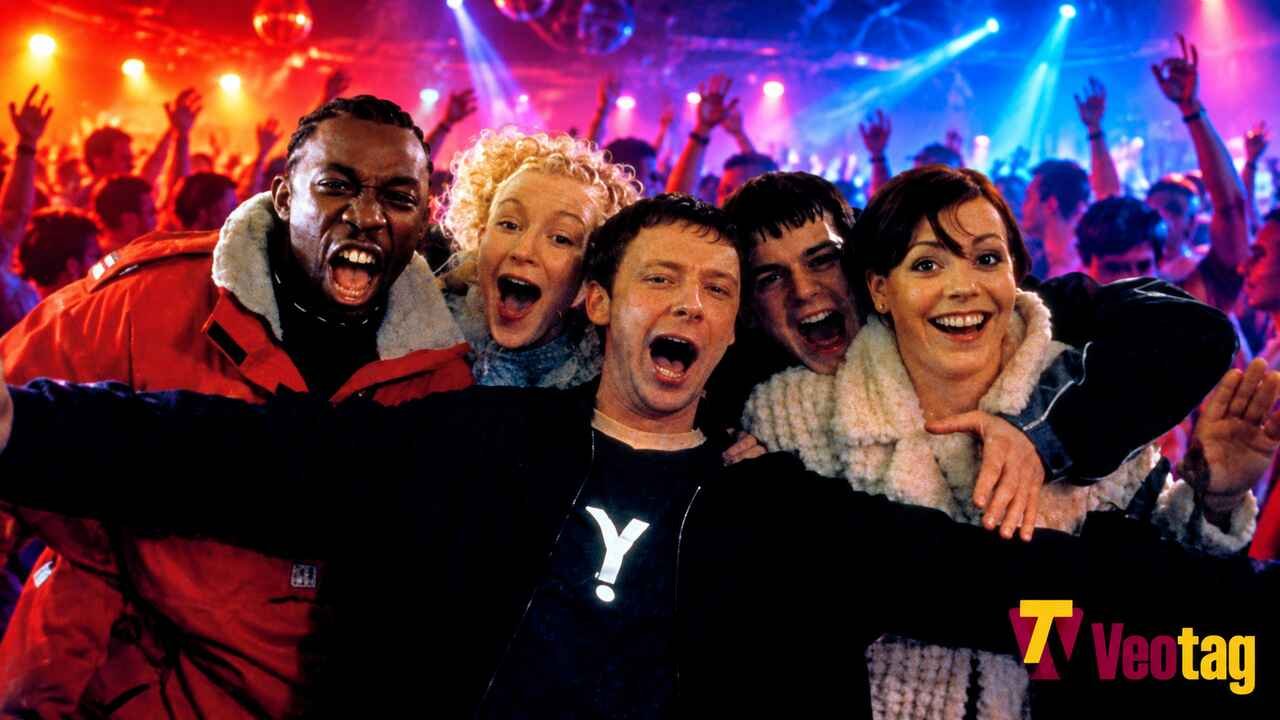
Human Traffic is a 1999 British comedy-drama directed by Justin Kerrigan that follows five friends through a weekend of partying in Cardiff. Blending friendship, relationships, music, drugs, and nightlife, the film captures the energy and pressures of late-1990s British club culture and has since become a cult classic.
Human Traffic Movie at a Glance
| Detail | Information |
| Title | Human Traffic |
| Release year | 1999 |
| Director | Justin Kerrigan |
| Writer | Justin Kerrigan |
| Genre | Comedy-drama |
| Setting | Cardiff, Wales |
| Runtime | Approximately 99 minutes |
| Main cast | John Simm, Lorraine Pilkington, Shaun Parkes, Danny Dyer, Nicola Reynolds |
| Main characters | Jip, Lulu, Koop, Moff, Nina |
| Central subject | Friendship, nightlife and 1990s club culture |
The British Film Institute (BFI) describes Human Traffic as a cult classic from the “Cool Cymru” era and lists a 99-minute runtime. The British Board of Film Classification (BBFC) likewise identifies it as a 1999 comedy-drama directed by Kerrigan.
What Is the Human Traffic Movie About?
Human Traffic follows five young friends as they prepare for and experience a weekend of partying in Cardiff. Their working week is filled with problems ranging from unfulfilling employment to romantic and family difficulties. The weekend offers a temporary alternative where music, friendship and nightlife become the center of their world.
Jip, played by John Simm, is one of the film’s central figures. His personal anxieties run alongside the group’s preparations for their night out. His friends include Lulu, Koop, Moff and Nina, each bringing different frustrations and relationship dynamics into the weekend.
The story moves through pubs, clubs, conversations, drug use and after-party experiences rather than following a conventional adventure or crime plot. Its structure reflects the rhythm of an actual night out: preparation gives way to excitement, excitement becomes excess, and excess eventually reaches the quieter and less glamorous aftermath.
That distinction matters because the title can be misleading to someone encountering the movie for the first time. Human Traffic is not a movie about human trafficking. “Traffic” refers to the movement, interactions and social world surrounding its young characters.
Human Traffic Cast and Characters
The core cast gives the movie its ensemble character. Instead of treating the nightclub simply as a backdrop, the film follows several personalities whose individual problems continue beneath the partying.
John Simm plays Jip, whose anxieties and romantic life form an important part of the story.
Lorraine Pilkington plays Lulu, Jip’s friend and an important part of the group’s interpersonal dynamics.
Shaun Parkes plays Koop, whose relationship concerns and jealousy contrast with the freedom associated with the weekend.
Danny Dyer plays Moff, an energetic member of the group whose lifestyle also exposes some of the less glamorous consequences of constant partying. The BFI identifies Human Traffic as Dyer’s feature-film debut.
Nicola Reynolds plays Nina, another member of the five-person friendship group navigating work and weekend life.
The BFI’s official film listing confirms Simm, Pilkington, Parkes, Dyer and Reynolds among the principal cast.
Why Human Traffic Feels Different From a Typical Party Movie
The film’s lasting identity comes partly from the way it presents nightlife from inside the characters’ social world. It is less interested in creating an elaborate plot around clubbing than in reproducing the sensations and conversations associated with it.
Characters speak directly and energetically about work, relationships, sex, music, drugs and their expectations for the weekend. The film frequently uses heightened or stylized sequences instead of maintaining strict realism throughout.
That gives Human Traffic two perspectives at once. The characters can experience the weekend as liberating and communal while the audience can also see their anxiety, jealousy, exhaustion and dependence on escaping the working week.
The result is not simply “people go clubbing.” The film is also about what the weekend represents to young adults who feel restricted during the rest of their lives.
The Film’s Connection to 1990s British Club Culture
Understanding the period helps explain why Human Traffic developed such a strong identity.
The movie arrived in 1999, when dance music and club culture had already become highly visible parts of British youth culture. Rather than treating electronic music as incidental background sound, Human Traffic integrates it into the characters’ friendships, language and weekend rituals.
The setting also matters. Cardiff gives the film a distinctive identity outside the more familiar London-centered version of British nightlife on screen. The BFI associates the movie with the “Cool Cymru” cultural period, a label connected with the increased visibility of Welsh music, film and popular culture during the 1990s.
The film therefore works as both fiction and a period snapshot. Clothes, record shops, club environments, slang and music preserve details of a pre-social-media nightlife culture in which arranging a weekend and experiencing it were less mediated by smartphones and online platforms.
Friendship Is as Important as the Clubbing
The nightlife gets most of the attention, but friendship provides the movie’s emotional structure.
Each member of the group enters the weekend carrying problems from ordinary life. Going out creates a temporary shared space where those concerns can be ignored, discussed, exaggerated or transformed.
That helps explain why the film can shift rapidly between comedy and insecurity. A euphoric club sequence may sit close to a conversation about relationships or self-doubt. The contrast is part of the point: a great night does not permanently solve the circumstances waiting on Monday morning.
The friends nevertheless gain something meaningful from being together. The weekend functions as a recurring social ritual, giving them a sense of community that their jobs and other responsibilities often fail to provide.
Drugs in Human Traffic
Drug use is prominent in Human Traffic, particularly in its portrayal of the clubbing environment. It would therefore be misleading to describe the film merely as a music comedy.
The characters’ experiences include both pleasurable and unpleasant aspects of intoxication. The film depicts excitement and altered perception alongside paranoia, excessive behavior and the physical and emotional effects that follow the night out.
Its treatment can appear unusually open because the characters discuss drugs in everyday language rather than through the conventions of a crime story or anti-drug drama.
That does not make the movie suitable for every viewer. The BBFC specifically identifies drug misuse, very strong language, strong sex and sexual references in its current classification information. It also warns that the film contains flashing images that can affect viewers susceptible to photosensitive epilepsy.
Human Traffic Soundtrack and Music
Music is fundamental to Human Traffic. The soundtrack helps establish both the film’s pace and its connection with the late-1990s dance scene.
The BFI highlights artists including Matthew Herbert, Fatboy Slim, Brainbug and Orbital in describing the soundtrack.
Music heard in or associated with the film also includes material from artists such as Public Enemy, Armand Van Helden, Death in Vegas, William Orbit, System F, The Age of Love, Dillinja and Primal Scream.
This range is significant because the film does not reduce club culture to a single electronic genre. House, trance, jungle and other dance-oriented sounds sit alongside hip-hop and alternative music.
For someone discovering late-1990s British dance culture today, the soundtrack can therefore function as an entry point into the music surrounding the period rather than merely as background accompaniment to the movie.
What Does “The Weekend Has Landed” Mean?
One phrase became particularly closely associated with Human Traffic: “The weekend has landed.”
Within the film’s world, the weekend represents a dramatic transition. The characters spend their weekdays dealing with jobs, authority, family tensions and relationship problems. Friday and Saturday create a temporary period in which the normal hierarchy of their lives seems to disappear.
That makes the weekend more than free time. It becomes something the characters anticipate almost as an alternative existence.
This recurring contrast between weekday frustration and weekend release is one of the clearest ways to understand the movie. The partying matters because of what the characters believe they are escaping.
Major Themes in Human Traffic
Escapism
Work and personal problems create pressure during the week, while nightlife offers immediate relief. The film repeatedly explores the attraction of this cycle without suggesting that a weekend can permanently eliminate its underlying causes.
Youth and uncertainty
The characters have adult responsibilities but do not necessarily feel settled into adult identities. Employment, relationships, sex and family all produce uncertainty.
Friendship and belonging
The group provides a community in which the characters can temporarily put ordinary expectations aside. Their friendship gives emotional meaning to activities that could otherwise appear purely hedonistic.
Music as social identity
Dance music is not simply playing behind the characters. Musical taste helps define where they go, who they meet and how they understand their social environment.
The high and the comedown
One of the movie’s most effective contrasts is between anticipation and aftermath. Preparing for a night out feels full of possibility. The following period is physically and emotionally different.
That cycle gives the film a structure that viewers familiar with nightlife can recognize even when their own experiences differ from those shown on screen.
Is Human Traffic a Comedy?
Yes, although describing Human Traffic only as a comedy misses part of its character.
The BBFC classifies it within comedy and drama, while the BFI emphasizes its depiction of youthful hedonism and club culture.
Much of the humor comes from conversations, exaggeration, social observation and the characters’ perceptions while partying. At the same time, the movie addresses jealousy, insecurity, family problems, frustrating employment and the emotional consequences of excess.
“Comedy-drama” therefore describes the film more accurately than simply calling it a party comedy.
Human Traffic Ending Explained
The ending makes more sense when viewed as the completion of a weekend cycle rather than the resolution of a conventional plot.
The characters have moved from anticipation through partying and into the aftermath. Their night has produced memorable experiences and moments of connection, but it has not magically transformed every part of their lives.
That is central to the film’s view of youth culture. The weekend creates a temporary zone of freedom, but ordinary life still exists outside it.
The ending therefore reinforces the movie’s larger contrast: escapism can provide genuine friendship, pleasure and emotional release without necessarily solving the problems that created the desire to escape.
Why Did Human Traffic Become a Cult Movie?
Several qualities have helped the movie remain recognizable long after 1999.
First, it is unusually specific about its cultural environment. The language, music, locations and behavior belong to a recognizable time and place rather than a generic Hollywood version of nightlife.
Second, its ensemble structure gives viewers several perspectives on the same weekend. Romance, jealousy, humor, work frustration and friendship coexist instead of being reduced to one protagonist’s storyline.
Third, music is embedded deeply enough in the film that the soundtrack developed an identity of its own.
Finally, the film now has historical value. What contemporary audiences experienced as a depiction of their own club culture can be viewed by later audiences as a record of a particular moment in British and Welsh popular culture.
Its continued cultural visibility was demonstrated when the BFI gave the film a new 4K restoration and cinema release in 2025, followed by UHD and Blu-ray editions.
Human Traffic vs. a Conventional Coming-of-Age Movie
| Element | Human Traffic | Conventional coming-of-age story |
| Time frame | Concentrated around a weekend | Often months or years |
| Main environment | Pubs, clubs, homes and nightlife | School, home, university or work |
| Central conflict | Everyday pressures and personal uncertainty | Often one major life transition |
| Story structure | Episodic and experience-driven | Usually more plot-driven |
| Music | Integral to the cultural environment | Often supports scenes |
| Resolution | Life continues beyond the weekend | Often emphasizes a major change |
This structure helps explain why viewers expecting a strongly plotted drama may initially find the movie unusual. Its main subject is the experience of being part of this group at this particular stage of life.
Is Human Traffic Worth Watching Today?
Human Traffic remains especially relevant to viewers interested in British cinema, electronic music, 1990s youth culture or movies that capture a specific social scene.
Modern viewers should expect a film strongly rooted in its era. Its slang, attitudes, drug culture and depiction of relationships reflect the environment in which it was made. Some elements may consequently feel dated, while that same specificity is part of its value as a cultural snapshot.
It is also not a conventional narrative in which every scene pushes toward a dramatic climax. Viewers who approach it as an ensemble portrait of friendship and nightlife are closer to what the movie is trying to accomplish.
Where Can You Watch Human Traffic?
Availability depends on country and changes as streaming and licensing agreements expire.
The BFI restored Human Traffic in 4K and returned it to selected cinemas in 2025, with 4K UHD and Blu-ray releases following the theatrical restoration.
The BFI Player page also lists the movie, although availability can vary. For that reason, viewers looking for the film online should check current listings in their own region rather than relying on an older streaming guide.
FAQ’s
Human Traffic was released in 1999. It was written and directed by Justin Kerrigan and has a runtime of approximately 99 minutes.
The movie is set in Cardiff, Wales. The city and its nightlife form an important part of the film’s identity.
John Simm plays Jip, one of the central members of the five-person friendship group.
Yes. Danny Dyer plays Moff. The BFI describes the movie as his feature-film debut.
No. Despite its title, Human Traffic is not about the crime of human trafficking. It is a comedy-drama centered on five friends, nightlife, relationships, drugs, music and British club culture.
Yes. The BFI released a new 4K restoration in 2025, including a cinema release and subsequent UHD and Blu-ray editions.
Conclusion
Human Traffic is more than a movie about five friends going clubbing. Its weekend structure captures the contrast between monotonous working life and the temporary freedom its characters find through friendship, music and nightlife.
Justin Kerrigan’s film is especially distinctive because it commits so fully to the language, music and social atmosphere of its period. John Simm, Lorraine Pilkington, Shaun Parkes, Danny Dyer and Nicola Reynolds form an ensemble whose individual anxieties give the partying emotional context.
For viewers discovering the Human Traffic movie today, its biggest attraction may be the same quality that made it distinctive in 1999: it does not merely use club culture as scenery. It makes that culture, and the friendships formed within it, the subject of the film itself.
