

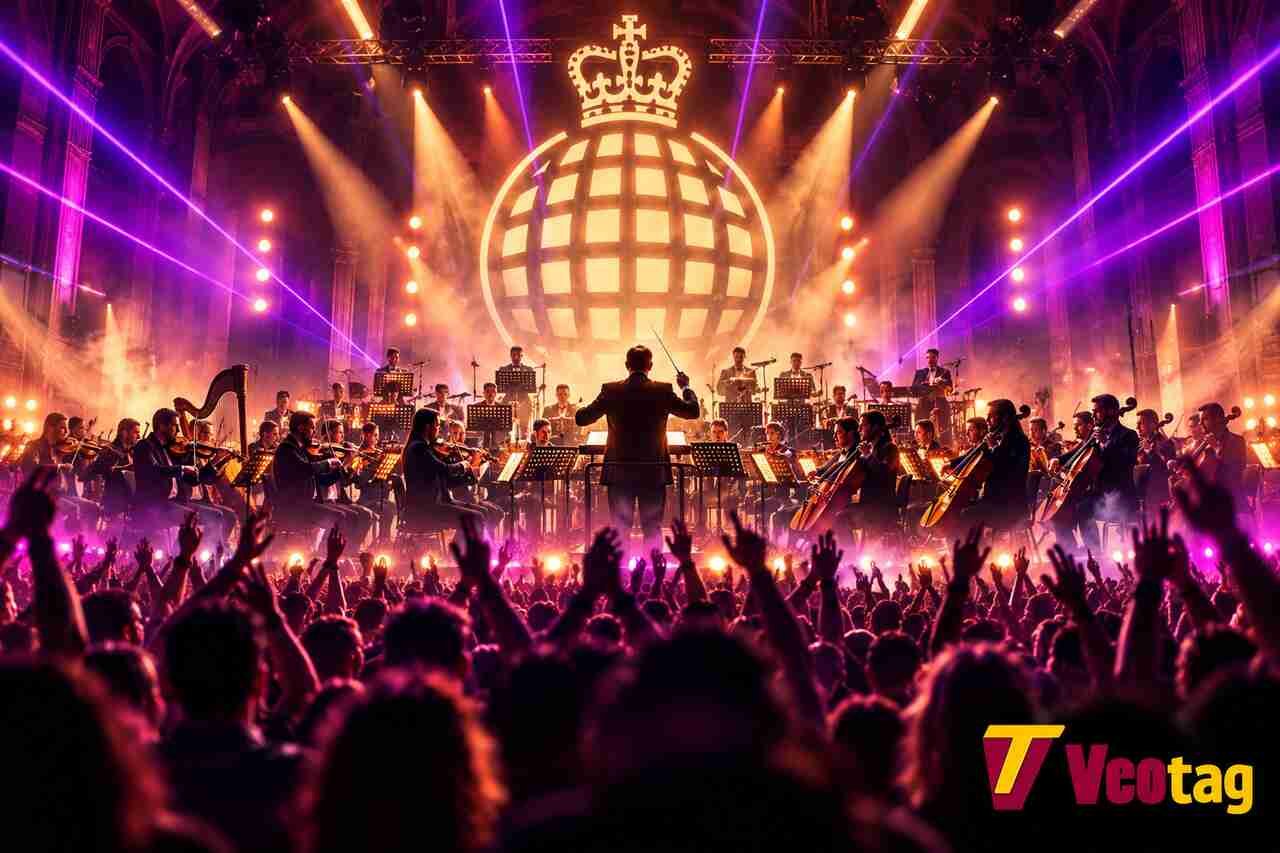
Ministry of Sound Classical reimagines iconic dance anthems as live orchestral performances, combining an orchestra and vocalists with concert-scale lighting and lasers. It blends the atmosphere of dance music with orchestral performance, offering a different experience from both a traditional classical concert and a standard Ministry of Sound club night.
What Is Ministry of Sound Classical?
Ministry of Sound Classical is a live orchestral celebration of dance music connected with the Ministry of Sound name. The concept takes recognisable club and electronic tracks and recreates them with orchestral arrangements, live vocals and concert-scale production.
Promoters describe the production as dance tracks that have been “re-orchestrated” and “re-imagined.” Recent versions have used orchestras ranging in size depending on the production and venue. The Royal Albert Hall performances, for example, have featured the 50-piece London Concert Orchestra.
That orchestral element changes how the music feels. String sections can take over synthesizer melodies, brass can reinforce dramatic hooks, percussion adds physical impact, and live singers reproduce vocal parts that many listeners originally encountered in clubs, on radio or through dance compilations.
The concept therefore appeals to several audiences at once. Long-time dance fans can revisit music associated with club culture, while people interested in live orchestral performances get a very different interpretation of electronic music.
What Music Does Ministry of Sound Classical Play?
The repertoire concentrates heavily on major dance records from the 1990s and subsequent decades. The precise setlist can change between concerts, so a particular song should not be assumed to appear at every performance.
Tracks associated with recent shows and promotional material include songs such as “Sandstorm” by Darude, “Sunchyme” by Dario G, “Insomnia” by Faithless, “Right Here, Right Now” by Fatboy Slim and “Hey Boy Hey Girl” by The Chemical Brothers. Other frequently featured dance classics include Robert Miles’ “Children” and Moloko’s “Sing It Back.”
A July 2026 performance at Rochester Castle, for example, opened with “Sandstorm” before moving through songs including “Sunchyme,” “Dreamer,” “I Luv U Baby,” “Right Here, Right Now,” “The Bomb! (These Sounds Fall Into My Mind),” “Sing It Back,” “Lola’s Theme,” “Children” and “Better Off Alone.”
That repertoire helps explain why the show works differently from an orchestra performing newly composed electronic-inspired music. Recognition is a major part of the experience. Listeners often know the hooks before the orchestra reaches them.
| Dance anthem associated with the show | Artist associated with the original |
| Sandstorm | Darude |
| Sunchyme | Dario G |
| Insomnia | Faithless |
| Right Here, Right Now | Fatboy Slim |
| Hey Boy Hey Girl | The Chemical Brothers |
| Children | Robert Miles |
| Sing It Back | Moloko |
Because individual concerts can have different arrangements, guests and running orders, this list is better treated as an indication of the repertoire than a guaranteed setlist.
How Dance Music Works With a Live Orchestra
Electronic dance music and orchestral music may seem far apart, but many classic dance records translate surprisingly well to orchestral arrangements.
Dance tracks frequently depend on repetition, gradual builds and recognisable melodic phrases. Those elements can be reassigned to strings, brass, percussion, keyboards and other instruments without losing the structure that makes the original song identifiable.
A synthesizer melody, for example, can become a string motif. A rising electronic build can expand across multiple orchestral sections. When the original recording would reach its drop or chorus, percussion, brass and strings can combine to create the equivalent live impact.
Vocals provide another connection to the original recordings. Ministry of Sound Classical productions incorporate singers alongside the musicians, and some events also feature guest DJs or performers.
The best way to understand the format is therefore not “classical versions of club songs” in the quiet, stripped-back sense. The orchestration is part of a larger concert production intended to preserve the scale and energy associated with dance music.
What Is a Ministry of Sound Classical Concert Like?
A Ministry of Sound Classical concert combines live musicianship with the atmosphere of a large entertainment event.
Audiences can expect an orchestra and vocalists supported by substantial sound and lighting production. Some versions also include special guest appearances. Royal Albert Hall productions have combined the orchestra with a laser-light show, reinforcing that these performances are designed as audiovisual events rather than traditional seated recitals.
The venue can significantly change the experience. Ministry of Sound Classical has appeared in concert halls, arenas, festivals, historic outdoor locations and other large venues. A performance inside the Royal Albert Hall naturally feels different from an outdoor summer event, even when much of the underlying repertoire is similar.
Set lengths and supporting lineups can vary as well. A festival appearance may form one part of a larger bill, whereas a headline concert can devote much more of the evening to the orchestral production.
Anyone buying tickets should therefore check the individual event rather than assuming every Ministry of Sound Classical date follows an identical format.
Ministry of Sound Classical vs a Regular Ministry of Sound Event
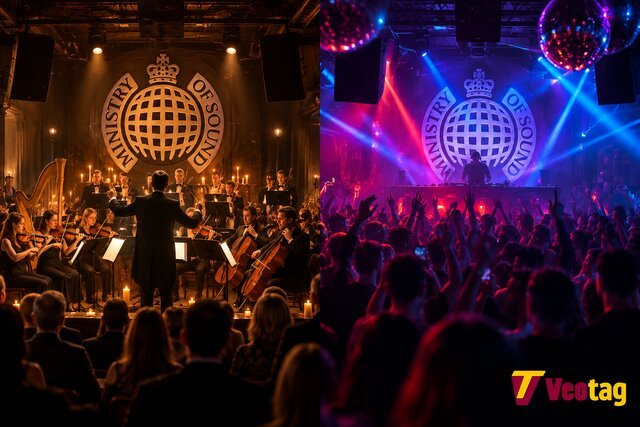
The biggest difference is how the music is performed.
| Ministry of Sound Classical | Typical dance or DJ event |
| Dance tracks are rearranged for orchestra | Recorded tracks are mixed by DJs |
| Live instrumental musicians are central | DJ performance is usually central |
| Live vocalists may perform | Original recorded vocals are commonly used |
| Concert-style staging is prominent | Club or festival staging varies |
| Focuses heavily on orchestral reinterpretation | Focuses primarily on mixing and electronic playback |
| Can take place in concert halls and historic venues | Commonly associated with clubs, arenas and festivals |
That distinction matters for anyone searching for tickets. Someone expecting a straightforward DJ set could be surprised by how prominent the orchestra is.
Conversely, someone expecting a restrained classical performance may be equally surprised by the dance-oriented production, lighting and crowd atmosphere.
Ministry of Sound Classical deliberately occupies the space between those formats.
The Connection With Ministry of Sound’s Dance-Music History
The Classical concept makes more sense when viewed against Ministry of Sound’s long association with dance culture.
The Ministry of Sound name became strongly associated with club music, DJs and dance compilations. The Classical production uses that musical heritage as its source material, selecting recognisable records from different periods of dance music and presenting them through contemporary live arrangements.
Promotional material for the Royal Albert Hall performances describes the production as celebrating more than 30 years of dance anthems.
This approach also allows tracks from different electronic styles and eras to appear within one concert. House, trance, big beat and other strands of dance music can sit next to one another because orchestration gives the programme a common musical framework.
Rather than recreating one specific historic club night, the show functions more like a live retrospective of widely recognised dance music.
Ministry of Sound Classical Tour Dates in 2026 and Beyond
Ministry of Sound Classical has continued touring internationally in 2026, with performances ranging from UK venues to dates elsewhere in Europe and Australia.
As of September 2026, published upcoming dates include Aberdeen on October 3, Brighton on October 31, Bucharest on December 12, Newcastle on December 17, Manchester on December 18 and Birmingham on December 19. The project’s current listings also show further performances planned for 2027.
Some currently listed dates include:
| Date | Location / venue |
| October 3, 2026 | P&J Live, Aberdeen |
| October 31, 2026 | Brighton Centre, Brighton |
| December 12, 2026 | Romexpo, Bucharest |
| December 17, 2026 | O2 City Hall, Newcastle |
| December 18, 2026 | O2 Apollo, Manchester |
| December 19, 2026 | Symphony Hall, Birmingham |
| June 4-5, 2027 | Royal Albert Hall, London |
Tour schedules can change, and additional performances may be announced. Anyone planning a trip specifically around a concert should confirm the date, venue, ticket status and event conditions with the venue or official ticket seller before arranging travel.
Royal Albert Hall and Ministry of Sound Classical
The Royal Albert Hall has become an important venue for the Classical production.
The 2026 edition followed three years of sold-out shows at the venue and expanded to three performances. These concerts featured a 50-piece London Concert Orchestra, vocalists and laser production while celebrating more than three decades of dance anthems.
The venue suits the concept particularly well because of the contrast involved. Music strongly associated with clubs and dance floors is performed inside one of London’s best-known concert halls by a large orchestra.
The relationship is continuing. Current Ministry of Sound Classical listings include Royal Albert Hall performances on June 4 and 5, 2027.
For audiences comparing different dates, a Royal Albert Hall show may also differ from touring productions in orchestra size and production details. The event listing should always be checked rather than assuming specifications from one venue apply everywhere.
How to Choose the Right Ministry of Sound Classical Event
Start with the venue and event format rather than choosing solely by date.
A dedicated indoor concert can provide a more controlled sound and visual environment. Outdoor heritage shows offer a different atmosphere, particularly during summer. Festival appearances can provide greater variety because Ministry of Sound Classical may share the bill with DJs, electronic acts and other performers.
Then check the advertised lineup. Guest performers are not identical at every event. Some dates have featured or advertised established DJs and dance acts alongside the orchestra, while others place greater emphasis on the main Classical performance.
Finally, look at practical details including doors, performance times, age restrictions, seating or standing arrangements, accessibility and transport. These conditions belong to the individual venue and should be verified before purchasing.
This is particularly important when travelling. Two events carrying the same Ministry of Sound Classical name can deliver the same core concept while differing substantially in setting, supporting lineup and overall schedule.
Who Is Ministry of Sound Classical Best Suited To?
The show is particularly relevant to people who enjoy classic dance music but want to hear it in a format that cannot be replicated simply by playing the original recordings.
Listeners who remember 1990s and 2000s club music are an obvious audience because much of the programme draws on recognisable records from those periods. The production can also work for younger dance fans who know the tracks through later playlists, remixes, samples and festival sets.
Classical listeners should approach it with different expectations from a conventional orchestral programme. The orchestra is fundamental, but the repertoire, amplified production and visual presentation come from dance culture.
Similarly, club fans should expect arrangements rather than exact reproductions of studio recordings. The point is to reinterpret the music.
That crossover is arguably the defining feature of Ministry of Sound Classical: familiar dance records are preserved enough to remain instantly recognisable while being rebuilt for a completely different type of live performance.
FAQ’s
Yes. The performances use orchestral musicians to recreate dance tracks, although the exact orchestra size can depend on the event. Royal Albert Hall productions have featured the 50-piece London Concert Orchestra, while other touring descriptions have advertised different configurations.
No. DJ appearances may be included at particular events, but the central concept is live orchestral reinterpretation of dance music rather than a conventional DJ set.
Recent performances and promotional material have included music associated with Darude, Dario G, Faithless, Fatboy Slim, The Chemical Brothers, Robert Miles and Moloko. Exact setlists can change between dates.
There is no single running time that applies to every event. Duration can vary between headline concerts, festival appearances and events with supporting performers. For example, the listed Rochester Castle performance on July 3, 2026 ran from approximately 8:30 p.m. to 10:00 p.m., but that should not be treated as a guaranteed duration for other dates.
Yes, vocalists are part of the live production. Particular events may also include original vocalists or other special guests, although lineups vary by performance.
No. Although the Royal Albert Hall has hosted major editions, Ministry of Sound Classical tours other UK cities and international destinations. Its 2026 schedule has included performances around the UK as well as international dates.
Final Thoughts
Ministry of Sound Classical takes the melodies, vocals and dramatic builds of well-known dance records and rebuilds them for an orchestral stage. The orchestra is not simply background accompaniment. It is the mechanism through which familiar electronic tracks are transformed into a different kind of live experience.
That makes the show most appealing to people interested in the intersection between dance nostalgia, live musicianship and large-scale concert production. With performances continuing through 2026 and dates already listed for 2027, the format has developed well beyond a one-off experiment.
Before choosing a show, check the specific venue, lineup, orchestra configuration and event schedule. Those details can vary considerably, even though the central idea remains the same: dance anthems reimagined for a live orchestra.
Read Also: Teddy Swims Scarborough: What Happened at His 2026 Open Air Theatre Shows
