

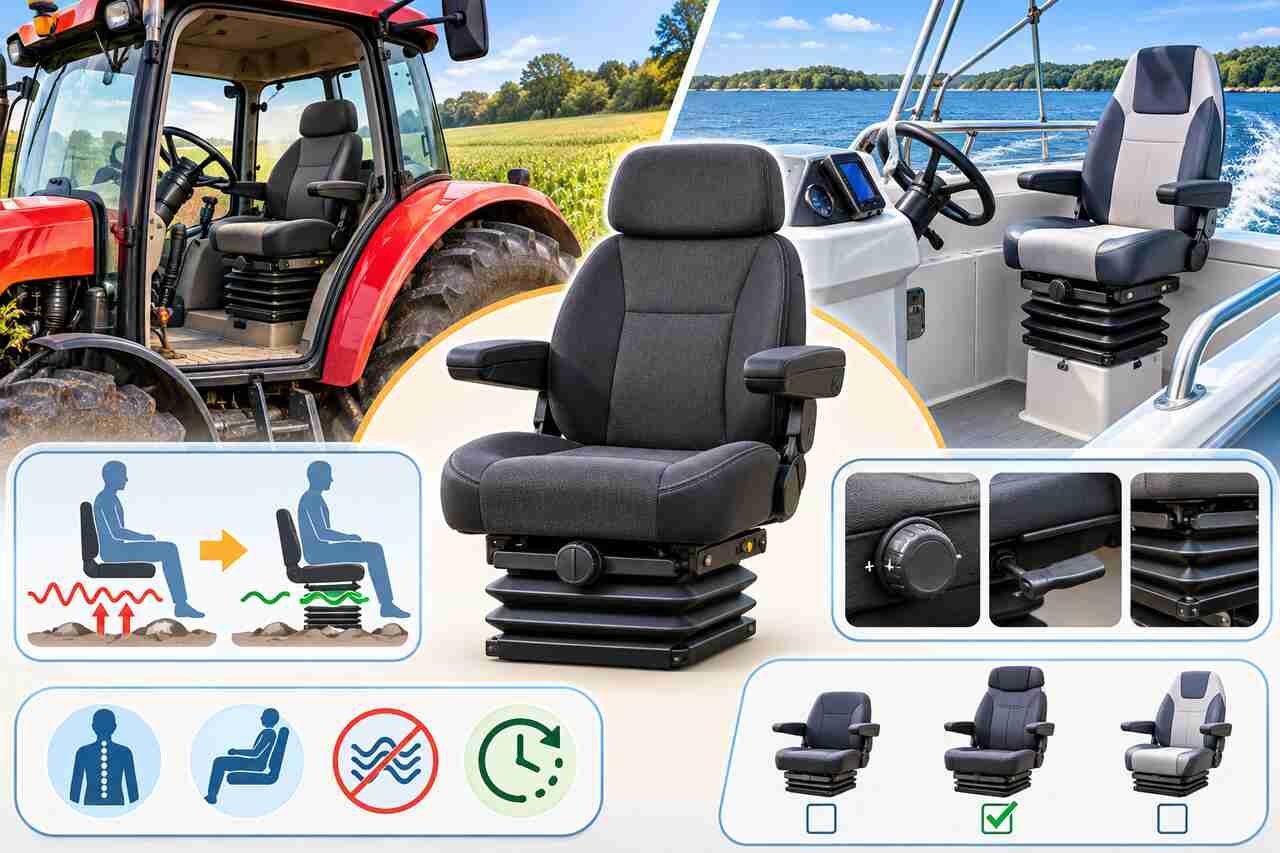
Tractors shake the operator all day. Boats slam the operator in bursts. A suspension seat sits between the person and that motion, taking up part of the shock before it reaches the spine.
What a Suspension Seat Is Actually Doing
A fixed seat bolts straight to the floor or deck. Every bump travels through the frame and into the operator. A suspension seat breaks that path. It places a controlled movement system between the base and the cushion.
That system lets the seat top move a short distance while the machine moves more. Coil springs and dampers handle most of that job in basic seats. The springs store energy from a jolt. The damper slows the rebound so the seat doesn’t bounce the operator twice. The result is less sharp motion at the hips and lower back, though some motion always gets through.
Beginners sometimes think suspension means soft and bouncy. Good suspension feels controlled and firm, with travel that stops before it hits the end.
Travel is limited on purpose. Most farm and marine units move only a few inches. That short stroke rounds off peaks without throwing the operator off line.
Why Tractors Wear Operators Down
Tractors look smooth from a distance. In the cab the ride is different. Rough ground, tire setup, implement drag, and cab position send steady low-frequency motion through the chassis. On a long day that adds up to hundreds of small hits to posture and concentration.
When a tractor crosses ruts at an angle for hours, the cab rocks sideways as well as up and down, forcing the torso to brace and keeping small stabilizing muscles under tension. Whole-body vibration is the term specialists use for that exposure. It doesn’t mean one hard hit. It means hours of repeated motion through the seat and floor. Drivers often report lower back aches after long shifts. Fatigue builds too, because muscles work to steady the torso.
Tractor seats sold for agricultural machinery are often tested to ISO 5007. That test measures how much vibration passes through the seat, so buyers can compare damping performance instead of guessing.
Hours matter more than speed.
Why Boats Feel Different From Tractors
A tractor ride is mostly continuous. A boat ride is mostly impacts. The hull leaves the water or meets a wave face, then lands with a sharp vertical hit. Those hits are shorter and harder than field bumps, and they load the spine differently.
Speed, wave angle, hull shape, and load change the force from minute to minute. A calm run back to the ramp isn’t the same as a choppy crossing with wind against tide. Operators brace with legs and grip the wheel or rail. That bracing tires the body fast. It’s one reason marine ride comfort gets talked about as impact protection rather than steady vibration control.
When a fast hull meets steep chop, deceleration can spike in a fraction of a second, so boat seating has to manage sudden bottoming loads that a farm seat would rarely meet. Tractors stay on soil and rock. Boats work on moving water that never repeats the same pattern. That’s why a seat from a farm machine doesn’t belong on a boat deck without rethinking mounts and materials.
The Parts That Do the Work
Most suspension seats use the same basic stack. A seat base or pedestal fixes the unit to the floor or deck. The suspension mechanism sits above it, supporting the cushion and backrest. Each layer has a job, and a weak link shows up as poor ride or posture.
The suspension itself is springs or an air bladder plus a damper. Coil springs carry the operator’s weight and allow vertical travel. An air bladder does the same job with pressurized air and more fine tuning. The damper controls movement speed so the seat settles after a bump instead of bouncing.
Ergonomic design shapes the top half. Seat depth and cushion density decide where pressure lands under the thighs. Lumbar support fills the lower back’s curve so the operator doesn’t slump. Fore-aft and height adjustments set eye level and reach to controls. Small changes there make long shifts less tiring on the neck and shoulders.
Mechanical Suspension Compared With Air Suspension
Mechanical suspension uses steel springs and a damper to give a set amount of travel. Most units include a weight adjustment dial that pretensions the springs. Turning it matches the suspension to light or heavy operators within the rated range. Outside that range the seat either tops out or bottoms out.
Air suspension replaces most of the spring force with an air bladder fed by a small compressor or manual pump. Adding or releasing air changes ride height and stiffness across a wider load range. That helps when different people share a tractor or helm. It also keeps travel in the middle of the stroke, where damping works best. The trade-off is more parts to check and a need for power or air supply on some models.
Neither type is best for every job. Short-travel mechanical units suit light tractors and small boats where space is tight. Long-travel air units suit heavy field work and fast hulls where load changes are wide and impacts are sharp.
Both types need to move freely without hitting the stops. There’s no universal winner on comfort or upkeep, because spring rate, damper tune, load range, and available travel decide how each seat behaves. A qualified maker or installer can assess whether the rated load range and travel fit the machine or vessel.
What Salt and Sun Do to Seats
Tractor cabs fight dust and mud. Boat decks face salt air and humidity along with spray and sun. Salt speeds up corrosion on steel frames and fasteners. UV breaks down cheap vinyl and plastics until they crack and fade.
That is why marine seats use different details from farm seats. Frames and pedestals need corrosion-resistant coatings and hardware suited to wet use. Upholstery needs UV-stabilized grades that shed water and resist mildew. Boat owners in southern Australia comparing options often search for marine seats melbourne to see what is stocked for saltwater use. An in-person look lets buyers examine stitching, base metal, pedestal fit, and drain paths and ask about aftercare.
Tractor seats don’t need that same package. Their covers need abrasion resistance against dust and grit, while their frames need protection against mud and washdowns. Mixing the two jobs shortens service life on either side.
What to Check Before Buying First Suspension Seat
First-time buyers get the best result from fit, not brand. A seat that matches body weight and work position will ride better than a costly unit set up wrong. These checks cover most mistakes.
Fit to the Body
Start with weight adjustment that covers the operator’s range with clothes and gear on. Check lumbar support that can move up or shift in depth. Fore-aft slides should let the feet reach pedals and the hands reach the wheel without stretching. Sit long enough to feel pressure points under the thighs. If knees sit high or the lower back feels empty, try a different cushion shape.
Fit to the Machine or Boat
Measure mounting dimensions before ordering. Rail spacing, hole pattern, pedestal height, and suspension clearance all need to line up. A tall pedestal suited to a workboat wheelhouse can block sightlines in a low recreational hull. A low base suited to a compact tractor can leave tall operators cramped at the controls.
Mount strength, control reach, visibility, suspension clearance, and restraint or interlock compatibility all need sign-off. A qualified maker or installer can assess whether the deck or cab floor can take the loads. The same check should cover belt anchor points and any seat switch tied to starting or drive functions. Don’t assume rails or bolt patterns carry over between brands, because small shifts in hole centers or lock positions can throw off fit.
Getting the Health and Work Claims Right
Long hours of whole-body vibration are linked in research with lower back pain and stiffness. Tractor drivers and boat crews both report those symptoms after rough days. A suspension seat lowers the motion reaching the body. It doesn’t remove risk on its own. Speed, ground or sea state, tire pressure and hull trim, seat upkeep, and how the operator sits and drives still shape the outcome.
Fatigue follows the same pattern. Less jolting means muscles spend less effort holding posture. Many operators say they can stay focused longer with the suspension set right. Those gains also vary with workload, rest breaks, noise, and heat.
A suspension seat costs more than a fixed cushion up front. The payoff comes as steadier work pace and less strain across a season, not as promised medical results. Buyers should weigh that against service needs and the expected life of covers and dampers. No seat can prevent injury or guarantee fewer sick days, so speed choice, route planning, maintenance, and safe operating habits still carry much of the load.
Simple Care That Keeps Suspension Working
Dust and salt do most of the slow damage. Covers last longer when mud and salt film don’t sit on them for weeks. A rinse or wipe with maker-approved cleaners keeps stitching and coatings in better shape. Drying the seat and letting air move under the cushion helps hold off mildew in boats.
Mechanical parts need eyes more than tools. Look for loose play in slides and pivots. Listen for topping or bottoming that wasn’t there before. Check that weight and height controls still move through the full range. If travel feels short or the seat sags, ask the supplier about service or replacement parts.
Don’t run makeshift tests on rough ground or chop to judge the seat. Normal work at normal speeds already shows if setup is right. Small tweaks to weight setting and posture often fix more than new parts. When in doubt, ask the maker or installer rather than forcing parts to fit.
Seasonal storage matters for both tractors and boats. Parked machines collect moisture in sheds and on decks. A breathable cover keeps sun off while letting damp air escape. Air bladders hold shape better when stored near mid-height per maker guidance. A season-start check catches flat spots and stiff slides before busy weeks. Tractors and boats punish the body differently. Suspension seating cuts the sharp edge off both jobs when weight, travel, mounts, and materials match the task. Set it up with care and keep up with basic checks. Comfort lasts longer that way, and workdays feel shorter.
For more related articles, please visit Automotive Category of VeoTag!
